

As the snow begins to melt and daylight stretches longer across the Bristol Bay region, spring brings a welcome shift in energy. But during spring here in Alaska, this seasonal transition isn’t just about warmer weather—it’s also a critical time to reset your health.
After months of winter routines, many families in rural Alaska are suddenly more active, spending more time outdoors, traveling between communities, and preparing for fishing season. These changes can affect everything from physical safety to mental health, especially if your body and routines haven’t had time to adjust.
At Cama’i Community Health Center, we see spring as a checkpoint—a time to make sure your family is healthy, prepared, and supported for the months ahead. Whether it’s catching up on care, preventing injuries, or addressing seasonal changes in mood and energy, taking small steps now can lead to better outcomes later.
Here are 7 important spring health checklist items to help your family stay on track.
If you’ve been putting off care, now is the time—book an appointment and reset your health this spring.
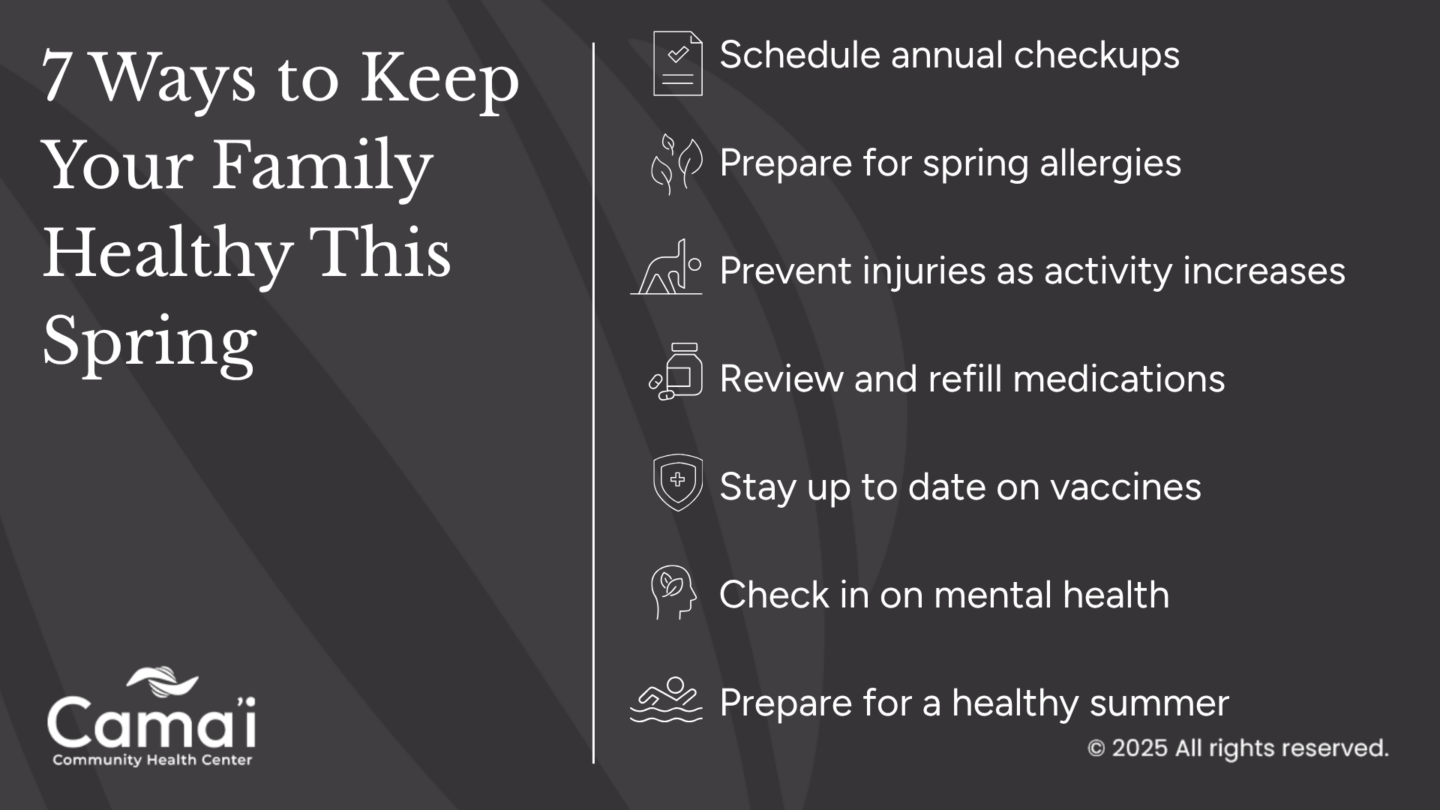
1. Schedule Annual Checkups and Preventive Care
Spring is one of the best times to reconnect with your provider and schedule routine visits for the whole family.
Many people in rural areas wait until something feels wrong to seek care. But preventive visits help identify issues early—before they turn into more serious conditions.
Annual appointments support:
- Monitoring growth and development in kids and teens
- Managing chronic conditions in adults
- Screening for high blood pressure, diabetes, or other health risks
- Reviewing medications and treatment plans
For children and teens, these visits also ensure they are ready for summer activities and travel. For adults, it’s an opportunity to talk through changes in energy, sleep, or overall health.
Preventive care is one of the most effective ways to protect your long-term health.
2. Stay Ahead of Spring Allergies and Respiratory Issues
Even in Alaska, seasonal changes can trigger allergy symptoms. As snow melts, mold spores, dust, and early plant allergens become more active.
Common symptoms include:
- Sneezing and congestion
- Itchy or watery eyes
- Headaches and fatigue
- Disrupted sleep
These symptoms may seem minor, but over time, they can affect daily life, school performance, and overall well-being.
To reduce symptoms:
- Limit exposure on windy days
- Wash your hands and change clothes after being outdoors
- Keep indoor air clean when possible
- Talk to your provider about appropriate treatments
If symptoms persist, seeking care can help prevent complications like sinus infections or worsening respiratory conditions.
3. Prevent Injuries as Activity Increases
After a long winter, the body isn’t always ready for sudden increases in movement. Spring often brings a spike in injuries as people return to outdoor work, sports, and daily activity.
In rural Alaska, environmental factors like melting ice, uneven ground, and wet surfaces increase risk.
Common injuries include:
- Sprains and strains
- Falls
- Cuts and scrapes
- Overuse injuries
Prevention starts with preparation:
- Ease into physical activity instead of jumping in all at once
- Stretch to improve mobility and flexibility
- Wear proper footwear
- Check outdoor spaces for hazards
For families, this is especially important for kids who may go from indoor routines to full days of outdoor play.
Taking a gradual approach helps keep everyone active and pain-free through the season.
4. Review and Renew Medications Before Summer
Spring is the ideal time to check medications and supplies before travel, fishing, or extended time away from home.
Important steps include:
- Refilling prescriptions
- Checking expiration dates
- Reviewing dosage with your provider
- Updating emergency medications
This is especially important in remote communities where access to pharmacies may be limited.
Running out of medication during a busy season can disrupt care and create unnecessary risk. Planning ahead ensures continuity and peace of mind.
5. Stay Current on Vaccinations and Screenings
Preventive care doesn’t stop at annual visits. Staying up to date on vaccinations and screenings helps protect both individuals and the broader community.
Spring is a great time to:
- Catch up on missed vaccines
- Prepare for school or travel requirements
- Complete recommended screenings
Preventive services play a key role in reducing illness and improving long-term outcomes for patients of all ages.
Cama’i works with families to ensure each person receives care that fits their age, health history, and individual needs.
6. Support Mental Health During Seasonal Change
Seasonal transitions can have a real impact on mental health—especially in Alaska, where winter patterns can linger even as daylight increases.
While many people feel more energized in spring, others may experience:
- Lingering depression or low mood
- Increased anxiety
- Disrupted sleep or insomnia
- Difficulty adjusting to new routines
These changes are normal—but they still matter.
Supporting psychological health can include:
- Keeping consistent sleep and meal schedules
- Spending time outdoors in natural light
- Staying connected with family, friends, and community
- Taking breaks and managing stress
If symptoms continue or worsen, it may be time to seek professional support.
Evidence-based treatments such as Cognitive Behavioral Therapy (CBT), widely considered a gold standard, can help individuals manage anxiety, depression, PTSD, and other conditions. Specialized approaches like CBT-I can improve sleep, while therapies like ACT focus on building resilience and coping skills.
Across Alaska, many mental health providers now offer flexible care options, including virtual appointments, group therapy, and individual counseling. Services may also include routine psychiatric evaluation, medication support, and guidance tailored to each person’s needs.
At Cama’i, we provide behavioral health services for children, teens, adults, and families—because mental health is just as important as physical health.
7. Prepare for a Healthy and Active Summer
Spring is your opportunity to get ahead of what’s coming.
In Bristol Bay, summer often means:
- Fishing season
- Travel between communities
- Increased outdoor work
- Longer, busier days
Preparation now helps prevent stress later.
Consider:
- Scheduling physicals for sports or activities
- Restocking first aid supplies
- Planning meals and hydration strategies
- Checking safety gear and equipment
For families, creating simple routines—like regular meals, hydration, and sleep schedules—can make a big difference as life gets busier.
Preparation supports performance, safety, and overall well-being.
Spring Is a Time to Reset Your Health
Spring in Alaska is a transition—not just in weather, but in how we live, move, and care for ourselves.
It’s a chance to check in:
- How does your body feel?
- Are your routines supporting your health?
- Do you need support, guidance, or care?
Health experts often emphasize that spring is an ideal time to reset routines, refocus on healthy choices, and take advantage of longer days to support both physical and mental well-being.
At Cama’i Community Health Center, we’re here to support every part of your health—from preventive care to behavioral health services, from checkups to ongoing treatment.
You don’t need to wait until something is wrong to reach out. Spring is a time to take action, stay prepared, and build a healthier season ahead—for yourself and your family.
From checkups to behavioral health support, Cama’i is here to help you and your family feel your best this season. Reach out to us today.