
In rural Alaska, winter isn’t just a season—it’s a lifestyle shift. The cold is intense, the dark months are long, and access to the things that support mental health, like sunlight, fresh produce, or even social time, can feel increasingly limited. For many rural residents, these conditions create a perfect storm for winter stress, seasonal affective disorder (SAD), and feelings of isolation or burnout.
At Cama’i Community Health Center, we understand how hard winter can be on both body and mind. That’s why we’re sharing 7 realistic, rural-friendly strategies to help you protect your emotional well-being, manage stress, and support your mental health all winter long.
Noticing winter fatigue? Ask your provider at Cama’i about light therapy or vitamin D support.
1. Use Light to Reset Your Body and Mind
One of the biggest stressors in rural Alaska is the lack of natural light during the winter months. The body’s circadian rhythm, which helps regulate sleep, mood, and energy, relies on daylight to stay in sync. When sunlight disappears for long stretches, many Alaskans experience symptoms of Seasonal Affective Disorder, including:
- Persistent low mood or depression
- Sleep disruptions or extreme fatigue
- Cravings for carbs and sugar
- Difficulty concentrating or feeling hopeful
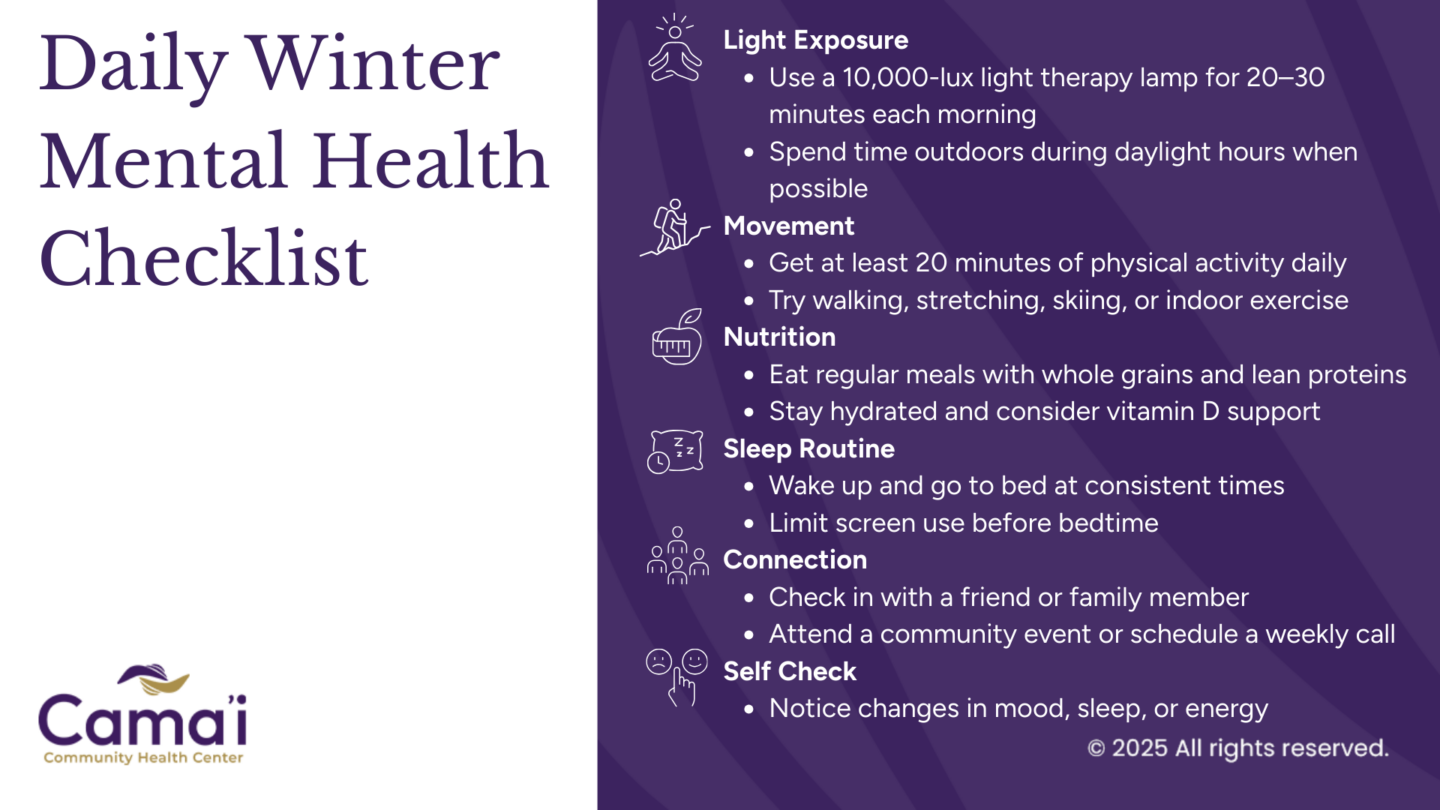
Light therapy is one of the most effective, natural treatments. A 10,000-lux light therapy lamp, sometimes called a “happy light,” can help your brain produce more serotonin and melatonin. Aim for 20–30 minutes each morning, ideally before 10 a.m., to mimic sunrise and stabilize your internal clock.
Also consider:
- Spending time outdoors during daylight hours, even on cloudy days
- Sitting near bright windows during meals or while reading
- Avoiding bright screens at night to preserve melatonin production
Even small shifts in light exposure can reduce SAD symptoms and improve sleep, energy, and mood.
2. Stick to a Daily Routine
Winter often disrupts our natural rhythms. When the sun sets early, it’s easy to lose track of time or feel detached from the outside world. But structure creates mental clarity, especially during long, dark winters.
A simple routine might include:
- Consistent sleep/wake times, even on weekends
- Three regular meals a day to help regulate mood and energy
- Set times for physical activity, house chores, and breaks
- A relaxing wind-down routine before bed
If possible, include a morning ritual (light therapy, journaling, coffee by the window) and an evening ritual (hot tea, stretching, reading) to bracket your day and cue your body toward rest or wakefulness.
3. Eat to Support Your Energy and Emotional Well-Being
In colder months, our bodies naturally crave more food, but not always the healthiest kind. Many people find themselves reaching for carbs, sugar, or processed snacks, which may feel comforting short-term but can worsen energy crashes and mood swings.
Cama’i encourages a practical winter nutrition strategy:
- Focus on whole grains, lean proteins, and healthy fats
- Add at least one vegetable to each meal
- Blend traditional foods (like salmon, seal, berries, moose) with shelf-stable pantry staples
- Drink at least 8 cups of water or herbal tea daily—hydration affects mood and sleep
Also, ask your provider whether a vitamin D supplement is appropriate for you. Because of reduced sunlight, many Alaskans become vitamin D-deficient, which has been linked to depressed mood, immune issues, and low energy.
4. Move Your Body—Indoors or Out
Exercise is one of the most powerful natural tools for managing anxiety, depression, and stress. It helps release endorphins, regulate sleep, and give you a sense of momentum—even in the stillness of winter.
You don’t need a gym to get moving. Try:
- Walking laps indoors or along a plowed path
- Skiing or snowshoeing to soak up what little daylight there is
- Streaming yoga, stretching, or chair exercises at home
- Dancing or doing chores with music
Aim for 15–30 minutes per day of light to moderate activity. Even short bursts of movement can lift your spirits, ease muscle tension, and improve your ability to cope with stress.
5. Stay Social, Even When It’s Hard
Isolation is one of the biggest contributors to winter stress in rural Alaska. When weather, distance, or transportation limit connection, many Alaskans feel disconnected, even from people they love.
Make it easier to stay connected:
- Schedule weekly phone or video chats with a friend or family member
- Attend a community event, cultural gathering, or hobby group
- Check in on a neighbor—and let someone check in on you
- If you don’t feel like socializing, try a shared meal, movie, or simple check-in
Don’t underestimate how much even small moments of connection, a text, a wave, a cup of coffee shared, can support your emotional well-being during the coldest (and oftentimes, loneliest) months.
6. Try Stress-Relieving Techniques That Fit Rural Life
When stress builds up, your nervous system needs tools to regulate. But not every strategy works for every person. Here are a few calming practices tailored to rural residents:
- Deep breathing: Inhale for 4, hold for 4, exhale for 4. Repeat a few times.
- Nature walks: Snowy landscapes can calm your mind and provide quiet reflection.
- Stretching or progressive relaxation: Release stored tension.
- Journaling: Write down worries, plans, or three things you’re grateful for.
You don’t need to meditate on a mountain top—just a few intentional moments a day to slow down, reset your thoughts, and reconnect with your sense of peace.
7. Know When It’s Time to Seek Professional Help
If you’ve tried coping tools and still feel stuck in a depressed mood, exhausted, or emotionally numb, it may be time to talk to a mental health provider. Seasonal Affective Disorder (SAD) and depression are common, especially in rural Alaska, and seeking help is not a weakness—it’s an act of strength and self-care.
Look for signs like:
- Persistent sadness or hopelessness
- Sleeping too much or too little
- Changes in appetite or weight
- Withdrawing from loved ones
- Thoughts of self-harm or despair
Cama’i Community Health Center offers behavioral health care, including telehealth, counseling, and psychiatric services. If your symptoms worsen, call the 988 Suicide & Crisis Lifeline, available 24/7.
You’re Not Alone This Winter—Cama’i Is Here to Help
Staying well during an Alaskan winter isn’t just about surviving—it’s about supporting your mental health with real tools, small steps, and compassionate care.
At Cama’i, we understand how rural life creates unique challenges, and we’re here to walk beside you every step of the way. Whether you need a checkup, light therapy recommendations, help managing SAD symptoms, or someone to talk to, we’re here—with warmth, wisdom, and respect.
Small Changes Can Lead to a Healthier Season
Winter can feel heavy, but it doesn’t have to take over your life. With the right habits, support systems, and tools, it’s possible to reduce stress, lift your mood, and build a routine that nourishes your body and mind.
You are not alone in this. Many Alaskans struggle in the cold, dark, and quiet, but you don’t have to struggle silently. Reach out. Start small. Your health is worth it. Contact Cama’i today.