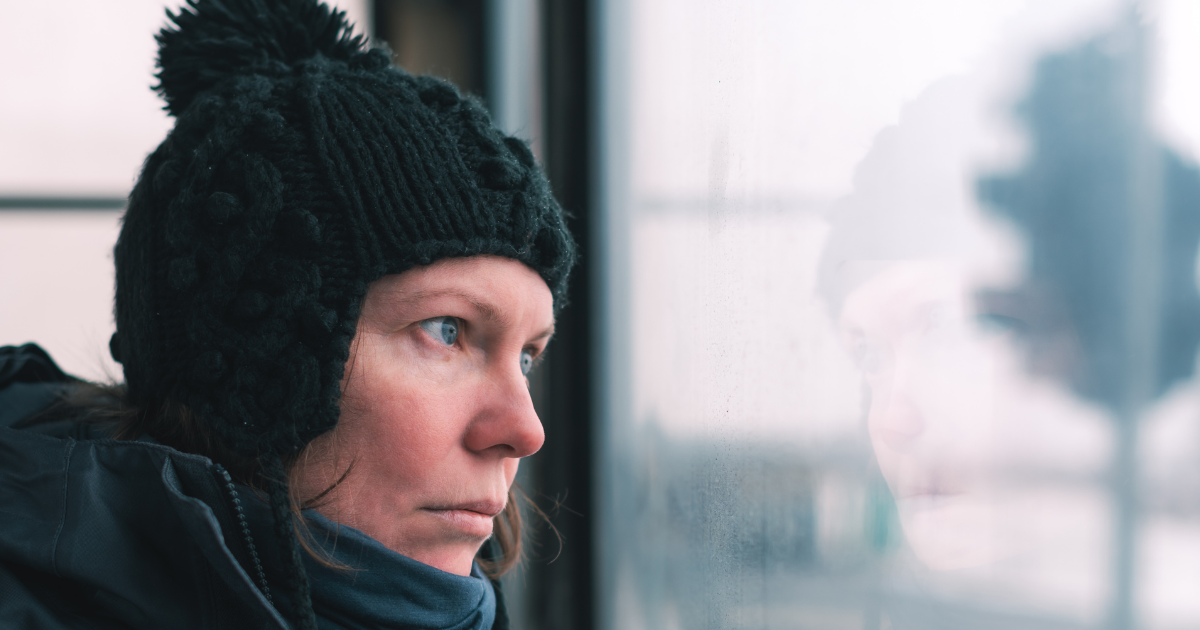
Alaska’s winters are long and dark—and while that’s nothing new to the people of Bristol Bay, it doesn’t make it easy. For many residents, especially those in rural and remote villages, the shift into deep winter brings not just colder temperatures, but a heavy emotional toll. Whether it’s feeling tired all the time, losing interest in daily life, or struggling with mood swings and irritability, Seasonal Affective Disorder (SAD) is a real challenge for many Alaskans, and it often goes unspoken.
At Cama’i Community Health Center, we understand how hard winter can be on your mental health. We also know that it’s possible to feel better. With the right support, education, and care, you can manage symptoms and protect your emotional well-being through the darkest months. You’re not alone—and you don’t have to go through it alone either.
Need someone to talk to? Reach out to Cama’i for compassionate, confidential behavioral health care.
What Is Seasonal Affective Disorder (SAD)?
Seasonal Affective Disorder is a form of depression that occurs during a specific time of year—most commonly late fall through early spring. In Alaska, where sunlight is scarce during the winter months, the body’s internal clock can fall out of rhythm. This disruption leads to chemical imbalances in the brain that affect your mood, energy, and sleep.
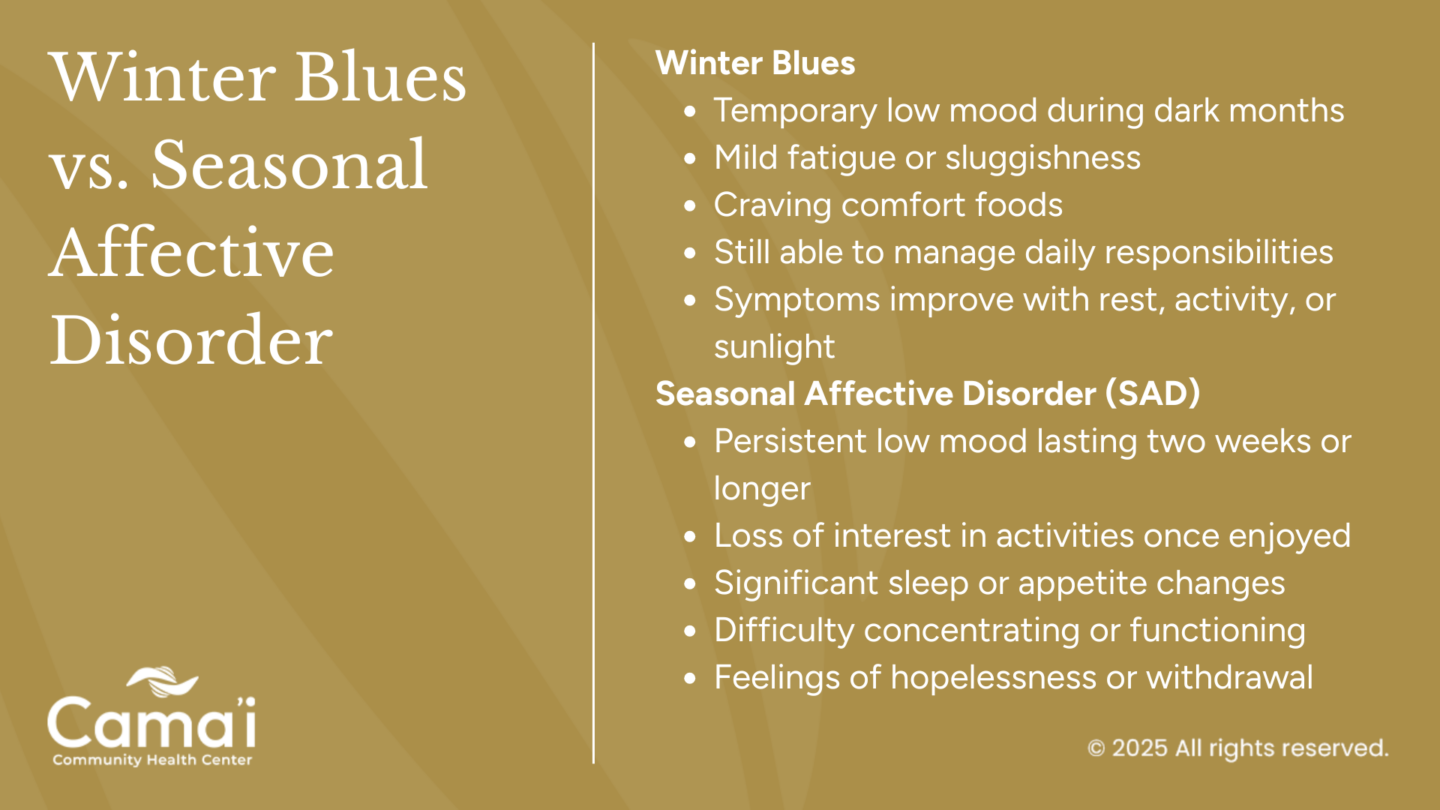
While many people experience some version of the “winter blues,” SAD is more severe and persistent. It can interfere with your ability to function, connect with others, or enjoy everyday life.
Common SAD Symptoms Include:
- Persistent low mood or a deep sense of sadness
- Sleeping too much or experiencing insomnia
- Low energy or fatigue that won’t go away
- Overeating, particularly craving carbs and sugar
- Withdrawing from family, friends, or community events
- Difficulty concentrating or completing tasks
- Feelings of hopelessness, guilt, or worthlessness
- Thoughts of self-harm or suicide in severe cases
If you recognize these symptoms in yourself or someone you love, know that you are not alone. Many Alaskans experience SAD, especially those living in rural areas like Bristol Bay, where access to sunlight, and sometimes access to care, is limited.
Why Is SAD So Common in Alaska?
In regions like Bristol Bay, SAD is more prevalent due to a mix of environmental and community factors:
- Reduced sunlight during the winter months
- Long periods of isolation in rural villages
- Difficulty accessing behavioral health professionals
- High rates of food insecurity and economic stress
- Fewer social activities or community events during winter
- Cultural and generational grief related to climate change and loss of subsistence practices
Many Alaska Native communities in the region also carry the weight of historical trauma and ongoing inequities in access to health care and behavioral health support. These realities make the need for compassionate, culturally sensitive care even more important.
How Cama’i Supports Behavioral Health in Bristol Bay
At Cama’i Community Health Center, we believe behavioral health is part of total health. We offer confidential, compassionate care for children, teens, adults, and elders—whether you’re dealing with depression, anxiety, trauma, substance use, grief, or seasonal mood changes.
Our services include:
- Mental health screenings for depression, anxiety, PTSD, and ADHD
- Individual counseling for adults and youth
- Family and couples counseling
- Crisis intervention and support
- Substance use disorder treatment
- Behavioral health services for children and teens
- Medication management and psychiatric services
- Telehealth appointments to increase access in remote areas
Our team includes trained behavioral health clinicians, counselors, and aides who understand the unique challenges of life in rural Alaska.
Recognizing When It’s Time to Ask for Help
Sometimes it’s hard to tell whether what you’re feeling is “just winter” or something more serious. Here’s a general rule: if it’s getting in the way of your life, it matters.
You don’t have to wait until you’re in crisis to reach out. In fact, early support often leads to better outcomes.
Reach out to Cama’i if you notice:
- Persistent sadness or irritability
- Trouble sleeping, eating, or engaging in life
- Increased use of alcohol or substances
- Anxiety that makes it hard to function
- Trouble at school, work, or in relationships
- Grief that doesn’t seem to ease over time
These symptoms are not signs of weakness—they’re signals your body and brain are asking for support.
What Behavioral Health Care Looks Like at Cama’i
If you’ve never seen a counselor before, it’s normal to feel nervous. But behavioral health care is not about judgment, it’s about healing.
When you make an appointment, here’s what you can expect:
- A warm, welcoming conversation
- A private, confidential setting
- Time to share your story at your own pace
- Simple questions to help understand what you’re going through
- Collaborative planning for next steps—counseling, referrals, medication, or just ongoing check-ins
You don’t have to have it all figured out to get started. You just have to take one small step.
Insurance & Payment Options
At Cama’i Community Health Center, we strive to make behavioral health care accessible for everyone in Bristol Bay, no matter your insurance status or income level.
We accept:
- All major insurance plans
- Medicaid and Medicare
- Military insurance (Tricare)
- Cash, credit cards, personal checks, money orders
- Purchase orders (from approved businesses with written agreements)
- Sliding scale fees for eligible individuals
Have questions about coverage or payment options? Our team is happy to help walk you through it.
Crisis Support Is Always Available
If you or a loved one are in crisis, don’t wait—help is here 24/7.
- Call the Suicide & Crisis Lifeline at 988 for immediate, confidential support.
- Reach out to Cama’i for urgent behavioral health needs.
- If someone’s safety is at risk, call 911 or go to the nearest emergency facility.
There is no shame in asking for help when things feel too heavy. There is always a way forward—and people who care.
Healing Happens in Community
Behavioral health support doesn’t just happen in a clinic. It happens:
- In shared meals and stories passed down
- In learning to name our feelings and ask for support
- In connecting with trusted elders, healers, or friends
- In returning to cultural roots that restore strength and identity
- In the simple act of saying, “I’m not okay,” and hearing, “You don’t have to go through this alone.”
At Cama’i, we are proud to be part of this healing journey with you.
It’s Okay to Talk About Mental Health
If winter feels heavier than usual this year, you’re not broken, you’re human. In Alaska, many families and individuals are impacted by mental health conditions, including depression, anxiety, PTSD, and substance use. But you can get better, and you don’t have to figure it out alone.
Let’s end the silence. Let’s support each other. Let’s talk about mental health—because it matters, and so do you.
If you’re feeling overwhelmed, struggling with your mood, or unsure where to start, reach out to Cama’i Community Health Center today. We’ll listen, guide you, and help you take the next step toward healing.