
Anxiety is one of the most common mental health conditions, but in rural Alaska, it can look and feel different.
If you’ve been experiencing constant worry, trouble sleeping, or feeling overwhelmed, you’re not alone. Many people across rural communities experience anxiety, even if they don’t always recognize it right away.
In fact, anxiety in rural Alaska is often shaped by unique environmental, cultural, and access-related challenges. Understanding what anxiety looks like, what causes it, and when to seek mental health care can help you take the first step toward feeling better.
At Cama’i Community Health Center, we provide compassionate care that supports your emotional well-being, your family, and your long-term wellness.
Whether your symptoms are new or ongoing, Cama’i is here to support your mental and emotional well-being. Reach out today.
What Anxiety Really Looks Like
Anxiety isn’t just stress—it’s a condition that affects both your mind and body.
According to the National Institute of Mental Health, anxiety disorders are among the most common mental health conditions and can affect both emotional and physical health if left untreated.
In rural Alaska, anxiety often shows up through physical symptoms, which can sometimes make it harder to recognize.
Common symptoms include:
- Persistent worry or racing thoughts
- Irritability or feeling on edge
- Difficulty concentrating
- Sleep problems or insomnia
- Fatigue, even after rest
- Muscle tension or headaches
Some people also experience:
- Rapid heartbeat
- Shortness of breath
- Stomach discomfort
- Panic episodes or panic attacks
These are all common presentations of anxiety disorders, especially in adults living in remote or high-stress environments.
It’s important to understand: anxiety is not a personal weakness—it’s a real health condition that can be treated.
4 Reasons Why Anxiety Feels Different in Rural Alaska
Living in remote communities comes with both strengths and challenges. While there is resilience and a strong community connection, there are also factors that can increase stress levels and affect mental health.
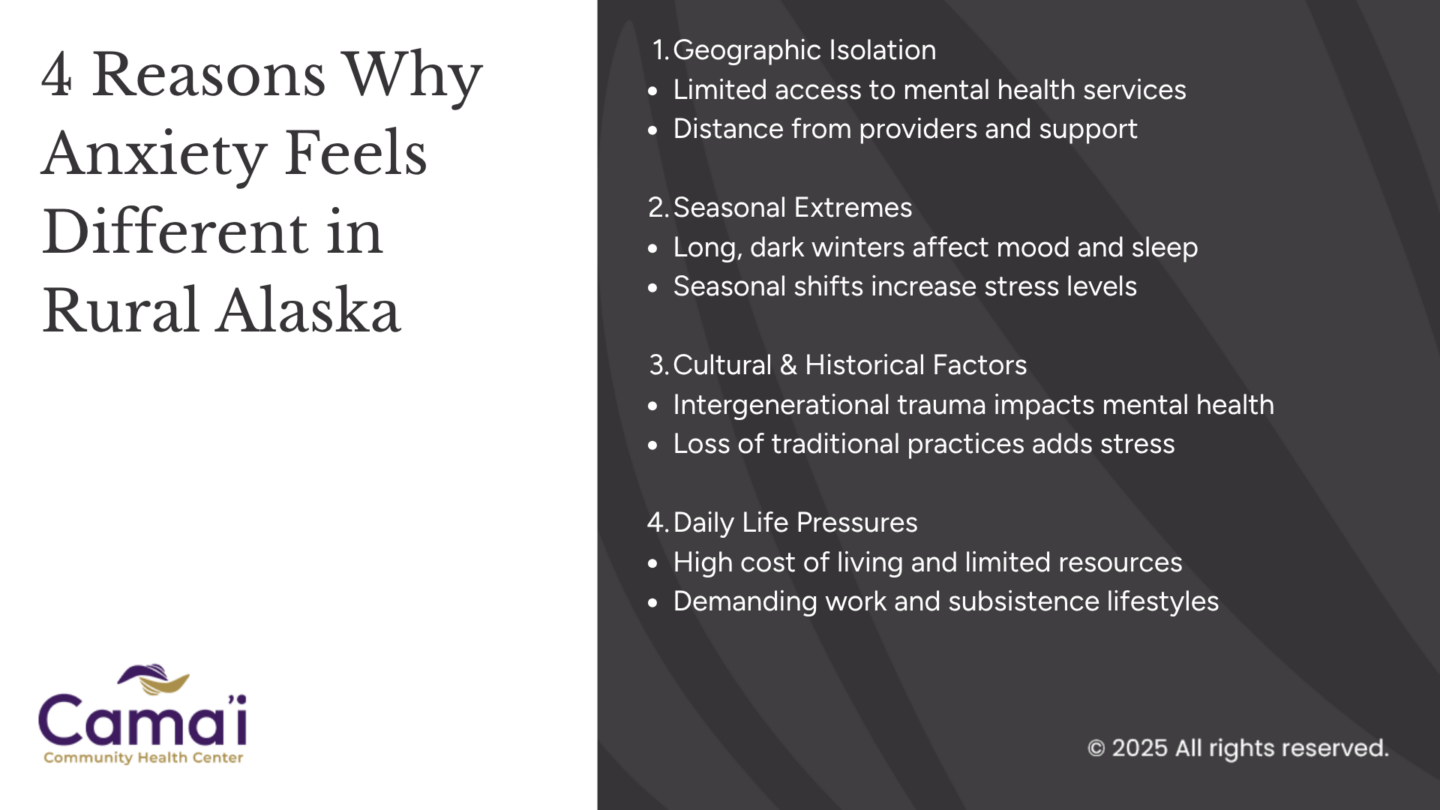
1. Geographic Isolation
In many parts of rural Alaska, distance can limit access to:
- Mental health services
- Immediate support
- Ongoing counseling or therapy
This isolation can increase feelings of disconnection and make it harder to seek help.
2. Seasonal and Environmental Stress
Long, dark winters and extreme seasonal shifts can affect mood, sleep, and emotional balance.
Seasonal Affective Disorder (SAD), a type of depression linked to limited natural light, is common in Alaska and can contribute to both anxiety and low mood.
Exposure to natural light helps regulate sleep cycles and improve mood, but during dark winters, this balance is disrupted.
3. Cultural and Historical Factors
For many Alaska Native people, anxiety and other mental health challenges can be influenced by intergenerational trauma, including the lasting effects of colonization, forced relocation, and boarding school experiences.
There may also be anxiety related to:
- Loss of traditional food systems
- Climate-related environmental changes
- Cultural disruption
These experiences can affect both individuals and families across generations.
4. Lifestyle and Economic Stress
Living in rural areas often includes:
- High costs of food and housing
- Seasonal work patterns
- Physical demands of subsistence living
These factors can contribute to ongoing stress, which may increase anxiety over time.
Emotional and Behavioral Signs of Anxiety
Anxiety doesn’t just affect your body—it also impacts your thoughts and behavior.
You may notice:
- Persistent worry or fear
- Feeling overwhelmed by everyday tasks
- Irritability or mood changes
- Withdrawal from family or community
- Difficulty relaxing
In some cases, anxiety can lead to avoidance: skipping social events, delaying responsibilities, or isolating yourself from others.
Over time, this can affect your social well-being and relationships.
When Anxiety Becomes a Concern
Feeling stressed from time to time is normal.
But anxiety may require support when it:
- Interferes with your daily life
- Affects your sleep, work, or relationships
- Feels constant or difficult to control
- Leads to isolation or emotional distress
In rural communities, many people delay seeking help because they believe their symptoms aren’t “serious enough.”
But waiting can lead to worsening symptoms, including increased risk of depression or even suicidal behaviors.
Recognizing the early signs is a critical step in preventing suicide and improving overall mental health outcomes.
Barriers to Mental Health Care in Rural Alaska
Accessing mental health resources in rural Alaska isn’t always easy.
Common barriers include:
Limited Access
Many communities face shortages of mental health providers, leading to long travel distances or wait times.
Stigma and Privacy Concerns
In small villages, concerns about privacy and social judgment can prevent people from seeking care.
Self-Reliance Culture
Many residents are used to handling challenges on their own, which can make it harder to reach out for support.
These barriers don’t mean help isn’t available; it just means access may look different.
How People Cope and What Actually Helps
Despite these challenges, many Alaskans find ways to cope and build resilience.
Some of the most effective strategies include:
Building Social Connection
Strong relationships with family, friends, and community members provide emotional support and reduce isolation.
Staying Active
Physical activity helps regulate stress and improve mood, even in small amounts.
Practicing Relaxation Techniques
Simple techniques like:
- Deep breathing
- Mindfulness
- Progressive muscle relaxation
Can calm the nervous system and reduce anxiety symptoms.
Supporting Physical Health
Healthy habits like:
- Consistent sleep
- Proper nutrition
- Staying hydrated
Play a key role in managing anxiety and overall well-being.
The Role of Culture and Community in Healing
In rural Alaska, healing is not just individual—it’s often community-based.
Programs that incorporate:
- Traditional activities
- Cultural practices
- Community gatherings
Have been shown to improve mental health and reduce anxiety.
Engaging in activities like fishing, gathering, and sharing meals strengthens both identity and emotional resilience.
Community-led approaches are a powerful part of behavioral health support in Alaska.
When to Seek Professional Help
If anxiety continues or worsens, professional mental health care can make a meaningful difference.
At Cama’i, we offer:
- Counseling services
- Behavioral health support
- Mental health screenings
- Referrals for specialized care
Treatment may include:
- Therapy (including evidence-based approaches)
- Stress management strategies
- Support for trauma, grief, and anxiety disorders
Seeking help early creates a more realistic path toward healing and long-term wellness.
Accessing Support in Rural Alaska
Even in remote areas, support is available.
Options include:
- Telehealth and teletherapy services
- Community-based programs
- Behavioral Health Aides in local clinics
- Regional care providers
For immediate help, the 988 Suicide & Crisis Lifeline provides 24/7 crisis intervention and connects individuals to local resources.
You don’t have to wait until things feel overwhelming to reach out.
You Don’t Have to Handle Anxiety Alone
Anxiety can feel isolating, but it doesn’t have to be.
With the right support, tools, and care, it’s possible to:
- Manage symptoms
- Improve daily functioning
- Strengthen relationships
- Build long-term resilience
Many people don’t realize how much better they can feel until they take that first step.
Finding Support in Your Community
Life in rural Alaska comes with unique challenges, but also strong communities, resilience, and connection.
If you or someone in your family is experiencing anxiety, it’s okay to ask for help.
At Cama’i Community Health Center, we’re here to support your mental health, your family, and your overall well-being—with care that understands your community, your culture, and your life.
If you or a loved one is struggling, contact Cama’i today to explore your mental health care options.