
If you feel healthy most of the time, it’s easy to assume you don’t really need primary care.
No symptoms. No major health concerns. No reason to schedule an appointment… right?
But here’s the reality: the importance of primary care has very little to do with how you feel today—and everything to do with how your health is managed over time.
At Cama’i Community Health Center, we see primary health care as the foundation of long-term wellness. It’s not just where you go when something is wrong—it’s how you stay ahead of problems before they begin.
Let’s take a closer look at why primary care is important, even if you usually feel fine.
Whether it’s prevention, treatment, or guidance, Cama’i is here to support you at every stage of life. Reach out to us today.
Feeling Healthy Doesn’t Always Mean You Are
Many health issues develop quietly.
Conditions like:
- High blood pressure
- Early-stage diabetes
- Heart disease
- Certain types of cancer
Often show no early symptoms.
That’s why early detection is so critical.
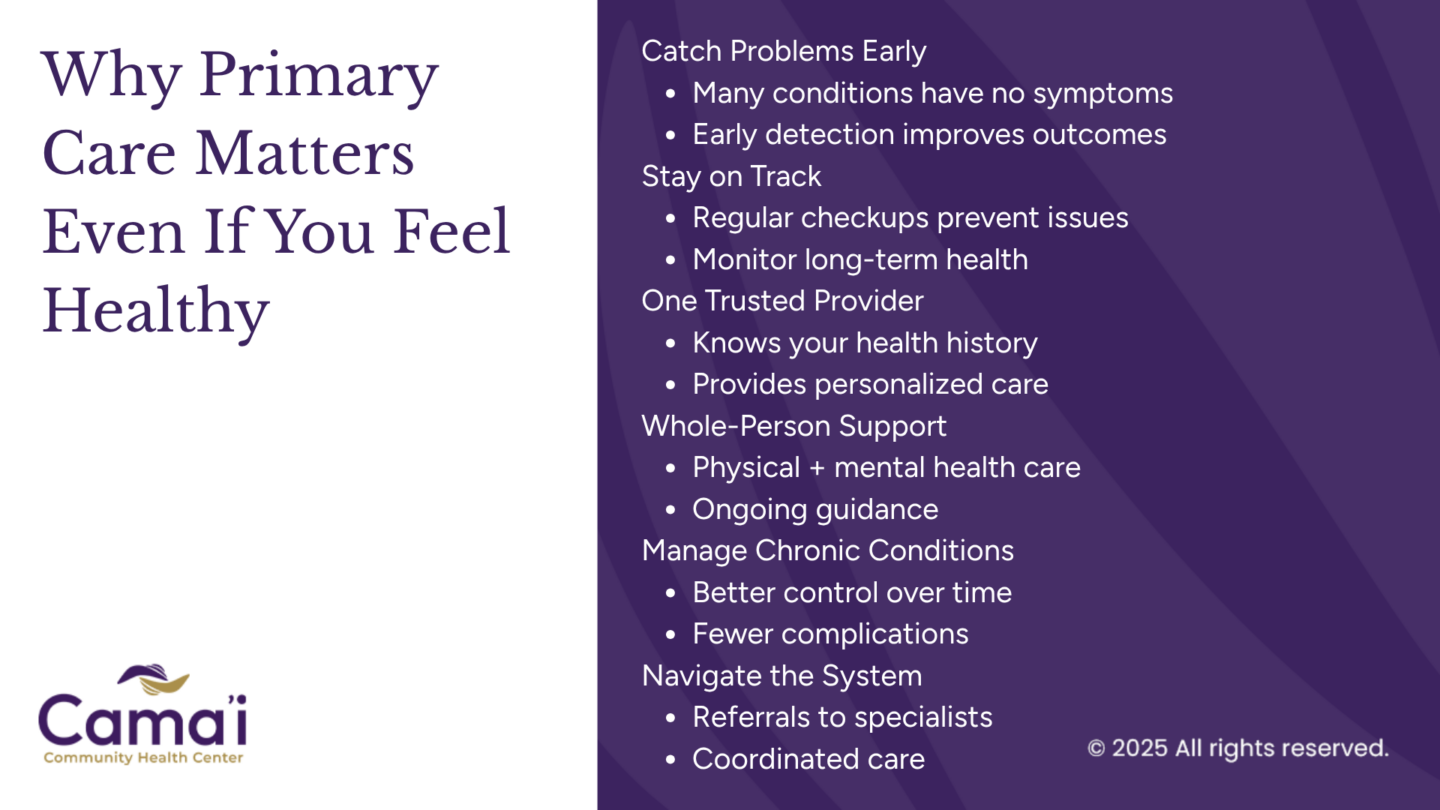
Through regular checkups, primary care providers can identify early signs of disease before they become serious. Research consistently shows that patients with access to primary care experience better health outcomes, including earlier diagnosis and more effective treatment.
You don’t need to feel sick to benefit from care—you need to stay informed about what’s happening in your body.
Primary Care Shifts Health from Reactive to Proactive
Most people interact with the health care system reactively:
- You get sick → you seek care
- You get injured → you go to the hospital
But primary care’s role is different.
It provides a central, coordinated approach that focuses on:
- Prevention
- Ongoing monitoring
- Managing chronic conditions
- Supporting long-term well-being
This approach is not only more effective—it’s also more cost-effective.
Studies show that patients who regularly see primary care doctors spend less time in the hospital and have lower overall health care costs.
Primary care is an efficient approach that helps prevent problems instead of reacting to them.
Your Provider Knows Your Health History—and That Matters
One of the biggest benefits of primary care services is continuity.
When you consistently see the same primary care physician, nurse practitioner, or physician assistant, they understand your:
- Medical history
- Family health patterns
- Lifestyle and environment
- Past treatments and medications
Having one provider who knows your health history is incredibly important in today’s complex health systems.
Instead of repeating your story at every visit, you build a relationship with someone who understands your baseline—and can quickly recognize when something changes.
That relationship makes it easier to:
- Talk openly about concerns
- Ask questions
- Get personalized guidance
Health care becomes more effective when it’s connected.
Primary Care Supports More Than Physical Health
Primary care providers don’t just treat physical conditions—they also play a critical role in supporting mental health.
Even if you feel physically well, you may still experience:
- Anxiety
- Depression
- Insomnia
- Stress related to work, family, or seasonal changes
Your provider can:
- Screen for mood disorders
- Offer early support
- Connect you with therapy or behavioral health services
- Recommend evidence-based treatments
Mental health is part of your overall wellness—not separate from it.
At Cama’i, we support both physical and emotional health because they directly affect each other.
It Helps Manage Chronic Diseases Before They Worsen
Even if you don’t currently have a diagnosis, primary care helps reduce your risk of developing chronic illnesses.
And if you do have a condition, like diabetes, high blood pressure, or another ongoing issue, regular visits help manage it effectively.
Patients who have consistent access to primary care providers:
- Experience better control of chronic diseases
- Have fewer complications
- Report a better overall quality of life
Primary care gives you the tools, education, and support needed to manage your health over time.
You Get a Central Point of Care
The modern health care system can feel overwhelming.
There are:
- Specialists
- Hospitals
- Different health care providers
- Multiple locations and services
Primary care acts as your first point of contact and your guide.
Your provider:
- Evaluates symptoms
- Makes recommendations
- Refers you to specialists when needed
- Coordinates care across systems
Most specialists require a referral, and your primary care provider ensures you’re connected to the right one.
This coordination improves outcomes and reduces confusion.
Regular Visits Lead to Better Outcomes
Research continues to show that having a primary care provider leads to:
- Lower mortality rates
- Fewer hospital visits
- Better management of diseases
- Lower overall costs
Patients who maintain regular visits are more likely to:
- Catch problems early
- Stay on track with treatment
- Feel confident in their care
Primary care helps people not just live longer—but live better.
It Builds a Relationship You Can Rely On
Health care works best when there’s trust.
When you build a relationship with your provider, you gain:
- Comfort discussing sensitive topics
- Confidence in recommendations
- A clearer understanding of your health
You don’t have to second-guess when something feels off—you already have someone to contact. That connection makes it easier to take action early.
Your health doesn’t stay the same—and neither does your life.
Major transitions like starting a new job, having a child, moving between communities, aging, or taking on new responsibilities can all affect your physical and mental health in ways that aren’t always obvious right away.
This is where primary care providers play an important role.
Because they understand your health history, your provider can help you:
- Adjust care as your needs change
- Monitor how lifestyle shifts impact your body
- Address new concerns early
- Update medications, screenings, or treatment plans
For example, increased stress may affect sleep or blood pressure. A new work schedule may impact nutrition, activity levels, or energy. Even positive changes can create new health needs.
Having consistent contact with a trusted provider ensures that your care evolves with your life—not behind it.
Primary care isn’t just about where you are today—it’s about making sure your care continues to fit where you’re going.
Primary Care Is for Every Stage of Life
Primary care isn’t just for one group—it supports people at every age.
Including:
- Pediatrics for children and teens
- Adult care through family medicine and internal medicine
- Support for families, individuals, and couples
Your health needs change over time. Having consistent care ensures those changes are managed effectively.
Cama’i Is Your Partner in Long-Term Health
At Cama’i Community Health Center, we don’t just provide care—we build relationships.
Our team includes:
- Primary care physicians
- Nurse practitioners
- Physician assistants
- Behavioral health providers
We offer:
- Preventive care
- Chronic disease management
- Mental health support
- Medication management
- Coordinated referrals
We understand life in Bristol Bay—seasonal work, travel between communities, and the realities of rural living.
Our goal is to provide care that fits your life, not the other way around.
So—Does Primary Care Matter If You Feel Healthy?
Yes. More than most people realize.
Because:
- Many conditions start without symptoms
- Prevention is more effective than treatment
- Early detection leads to better outcomes
- Relationships improve care
Primary care isn’t about reacting to illness. It’s about protecting your health, your life, and your future.
Staying Healthy Is an Ongoing Process
Health isn’t something you either have or don’t—it’s something you maintain.
And the people with the best long-term outcomes are often the ones who:
- Stay connected to care
- Ask questions early
- Follow up regularly
- Build a plan that works for them
You don’t need to wait for something to go wrong. Primary care is how you keep things going right.
Don’t wait for symptoms—connect with a Cama’i provider and stay ahead of your health this year.