
When someone you love is struggling with their mental health, it can be difficult to know what to do or even where to start.
You might notice changes in their mood, behavior, or energy. You may feel worried, unsure how to help, or afraid of saying the wrong thing.
In Alaska communities, especially in rural and remote areas, families often play a critical role in providing mental health support. Access to mental health services can be limited, and support systems often begin at home.
The good news is this: you don’t need to have all the answers to make a meaningful difference. Support starts with awareness, connection, and knowing when to help someone access the care they need.
When you’re not sure what to do next, Cama’i can help guide you and your loved one toward the right care.
Recognizing Signs of Mental Health Challenges
Mental health struggles don’t always look the same.
Some people openly express their feelings. Others may show signs through behavior or physical changes.
Common signs of mental health challenges include:
- Persistent sadness or low mood
- Increased anxiety or irritability
- Changes in sleep or appetite
- Withdrawal from family or community
- Difficulty concentrating
- Loss of interest in daily activities
Some individuals may also experience:
- Fatigue or low energy
- Headaches or other physical symptoms
- Emotional distress that feels hard to explain
Children and youth may show different signs, especially those experiencing trauma or severe emotional disturbance. They may express distress through behavior, mood swings, or difficulty engaging in school or relationships.
Recognizing these early signs allows families to respond with care and support.
Why Family Support Matters
Family and community play a powerful role in mental health support in Alaska.
Strong support systems help:
- Reduce isolation
- Encourage individuals to seek care
- Improve treatment outcomes
- Promote long-term well-being
Research shows that safe, stable, and nurturing relationships are essential, especially for children and teens who may not yet have the ability to fully express what they’re experiencing.
For many individuals, the path toward healing begins with feeling seen, heard, and supported at home.
Start with Listening and Understanding
When someone is struggling, it’s natural to want to fix the problem. But support often starts with listening.
You can help by:
- Giving your full attention
- Avoiding judgment or criticism
- Letting them speak at their own pace
- Acknowledging their feelings
Simple responses like:
- “I’m here for you.”
- “That sounds really difficult.”
- “You don’t have to go through this alone.”
Can create a sense of safety.
This kind of support helps reduce emotional distress and builds trust, making it easier for your loved one to open up.
Encourage Professional Mental Health Support
While family support is essential, professional care is often needed, especially when symptoms persist. Encouraging your loved one to seek mental health care can be one of the most important steps you take.
Support may include:
- Mental health assessment and diagnosis
- Individual therapy or counseling
- Family therapy or group therapy
- Medication management when appropriate
- Case management and care coordination
In Alaska, behavioral health services are available through:
- Community health centers like Cama’i
- Tribal health systems
- School-based programs for youth
Many services are designed to meet behavioral health needs across all ages, from children to adults.
Early intervention leads to better outcomes, especially for young people experiencing trauma or developmental challenges.
Understand Barriers to Getting Help
In rural Alaska, there are real challenges when it comes to accessing mental health resources.
These may include:
- Geographic isolation
- Limited availability of providers
- Long wait times
- Concerns about cost or insurance
- Privacy concerns in small communities
Stigma around mental illness can also make people hesitant to seek care. Understanding these barriers helps families respond with patience and compassion.
Sometimes, the most helpful thing you can do is continue to offer support until your loved one feels ready.
Know What Resources Are Available
Even with challenges, Alaska offers a range of mental health services and support systems.
Some key related resources include:
- 988 Suicide & Crisis Lifeline for immediate support
- Alaska Careline (1-877-266-4357) for 24/7 crisis intervention
- Alaska 211 for referrals to local health and human services
- NAMI Alaska, which provides free support groups and education
- Community-based programs supported by the Division of Behavioral Health
These services provide everything from crisis care to long-term treatment, including outpatient therapy, group therapy, and residential programs.
Knowing these options makes it easier to guide someone toward help when they need it.
Support Daily Habits That Improve Mental Health
Families can also help by encouraging daily habits that support mental wellness.
These include:
- Maintaining consistent sleep routines
- Encouraging physical activity
- Supporting healthy meals and hydration
- Spending time outdoors when possible
- Building regular social connections
Exposure to natural light helps regulate mood and sleep cycles, an important factor in Alaska, where seasonal changes can impact mental health.
Simple self-care habits can help reduce stress and support recovery.
Know When It’s Urgent
Some situations require immediate action.
If your loved one is:
- Talking about suicide
- Expressing hopelessness
- Showing drastic behavioral changes
- Withdrawing completely
It’s important to act quickly.
You can:
- Stay with them
- Contact a provider
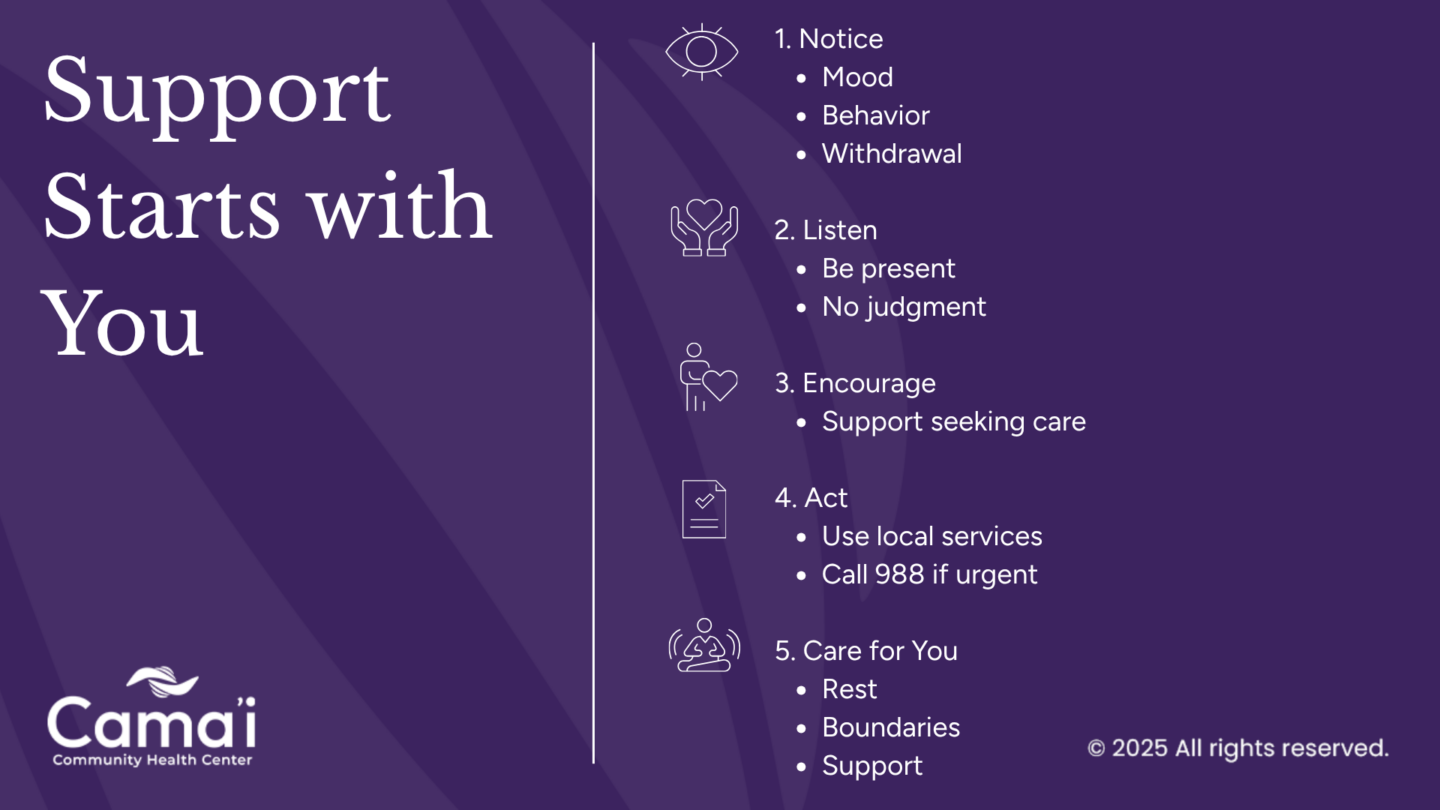
- Call or text 988 for immediate help
Crisis services are available 24/7 and can connect individuals to local support.
Taking action during these moments can save lives.
Take Care of Yourself Too
Supporting someone else can be emotionally demanding. It’s important to take care of your own mental health so you can continue to provide support.
You can:
- Talk to someone you trust
- Set healthy boundaries
- Take breaks when needed
- Seek support for yourself
You don’t have to carry everything alone. When you care for your own well-being, you strengthen your ability to support others.
The Role of Community in Alaska
In Alaska, healing is often rooted in community.
Community-based support systems, including cultural practices, peer support, and shared activities, play an essential role in improving mental health.
Programs that focus on:
- Cultural connection
- Community engagement
- Education and awareness
Help reduce stigma and strengthen resilience.
In many communities, behavioral health is not just individual, it’s collective.
How Cama’i Can Help
At Cama’i Community Health Center, we are committed to providing accessible, integrated mental health support in Alaska.
Our services include:
- Individual counseling
- Family and group therapy
- Behavioral health support
- Mental health assessments
- Referrals to specialized care
We work as part of your care team, alongside primary care providers and other services, to support your full health.
Our goal is to create a safe place where individuals and families can receive care that is compassionate, respectful, and tailored to their needs.
Support Is Closer Than You Think
If someone you love is struggling, you don’t need to have all the answers. What matters most is showing up, listening, and helping them take the next step when they’re ready.
In Alaska communities, support often starts with family, but it doesn’t end there. With the right combination of care, resources, and connection, it’s possible to move toward healing, stability, and a more meaningful life.
You don’t have to do it alone, and neither do they.
Start the conversation today—Cama’i is here to support your family’s mental health every step of the way.