
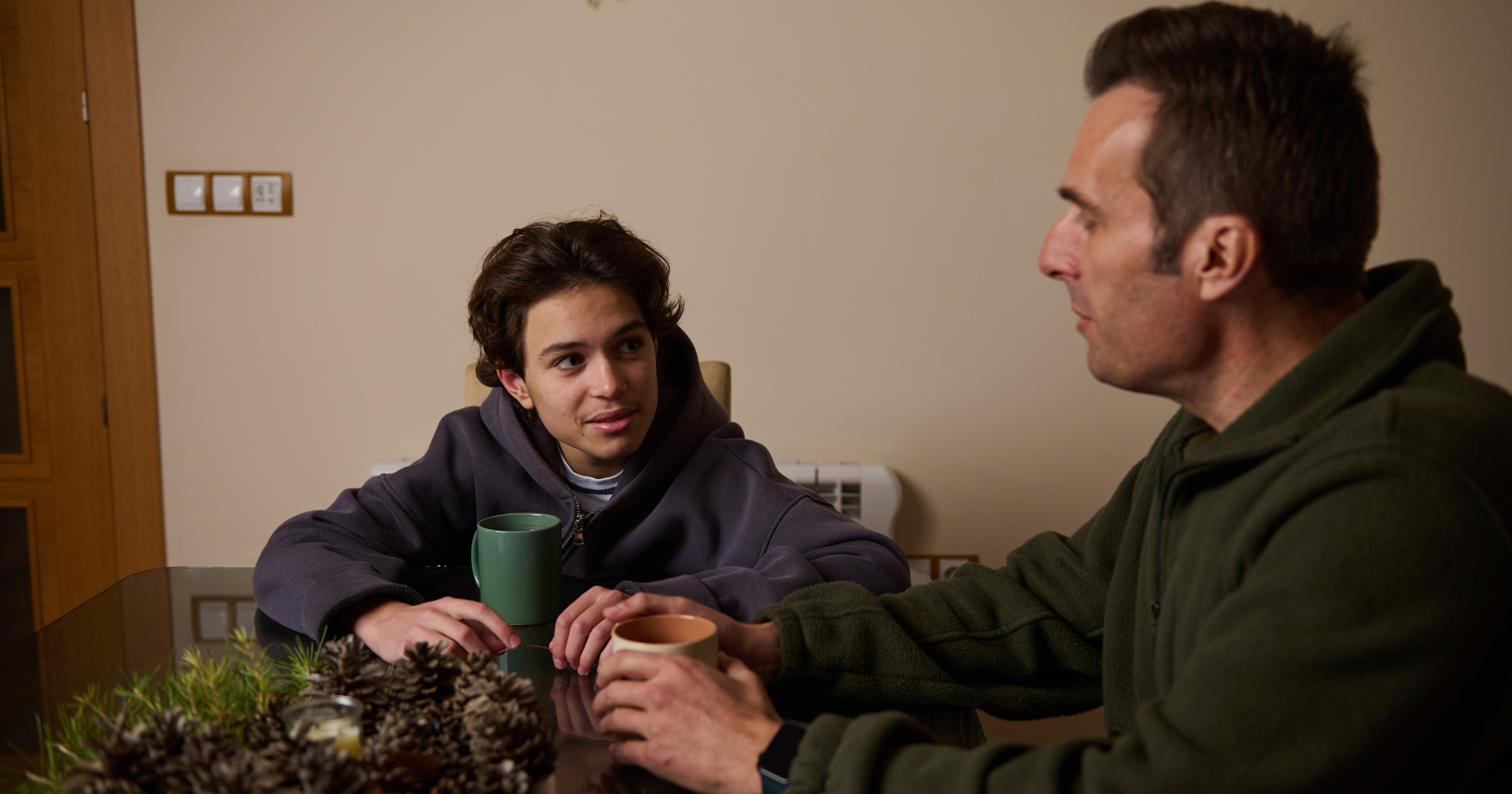
Talking to a teenager about mental health can feel hard, especially when you can tell something is off but you’re not sure how to bring it up.
Maybe your teen has been spending more time alone, stopped going out with friends, seems more frustrated at home, or isn’t as interested in the things they usually enjoy. In a small community, you may notice those changes pretty quickly. Other people may notice them too.
That closeness can be a real source of support for young people in rural Alaska. But it can also make privacy feel complicated. Your teen may worry about people finding out they’re struggling, what friends will think, or whether asking for help will become something everyone knows about.
That makes the conversations happening at home especially important. You don’t need the perfect words or all the answers. You just want your teen to know that when something feels heavy, they have someone they can talk to without being judged.
If you’re concerned about your teen’s mental health, Cama’i Community Health Center can help your family understand what’s going on and find the right level of support.
Why Teen Mental Health Deserves Attention
Teenagers are dealing with a lot at once. They’re figuring out who they are while navigating friendships, school, family expectations, relationships, social media, responsibilities at home, and decisions about what comes next.
For teens growing up in rural Alaska, that experience can have its own challenges. A young person may be deeply connected to family, culture, community, and the land while also wondering what their future will look like. They may be thinking about whether they’ll stay close to home, leave for school or work, or find opportunities elsewhere. In a small school or village, friendship problems can also be difficult to escape when you see the same people every day.
Supportive relationships can make a big difference during these years. So can having healthy ways to handle stress and knowing there are adults who will take you seriously.
Mental health conditions can also begin during adolescence. Anxiety and depression are common among young people, while some teens may experience eating disorders, substance use, self-harm, or other mental health challenges.
Having a hard week doesn’t necessarily mean your teen has a mental health disorder. Pay closer attention when a change lasts, becomes more intense, or begins interfering with everyday life.
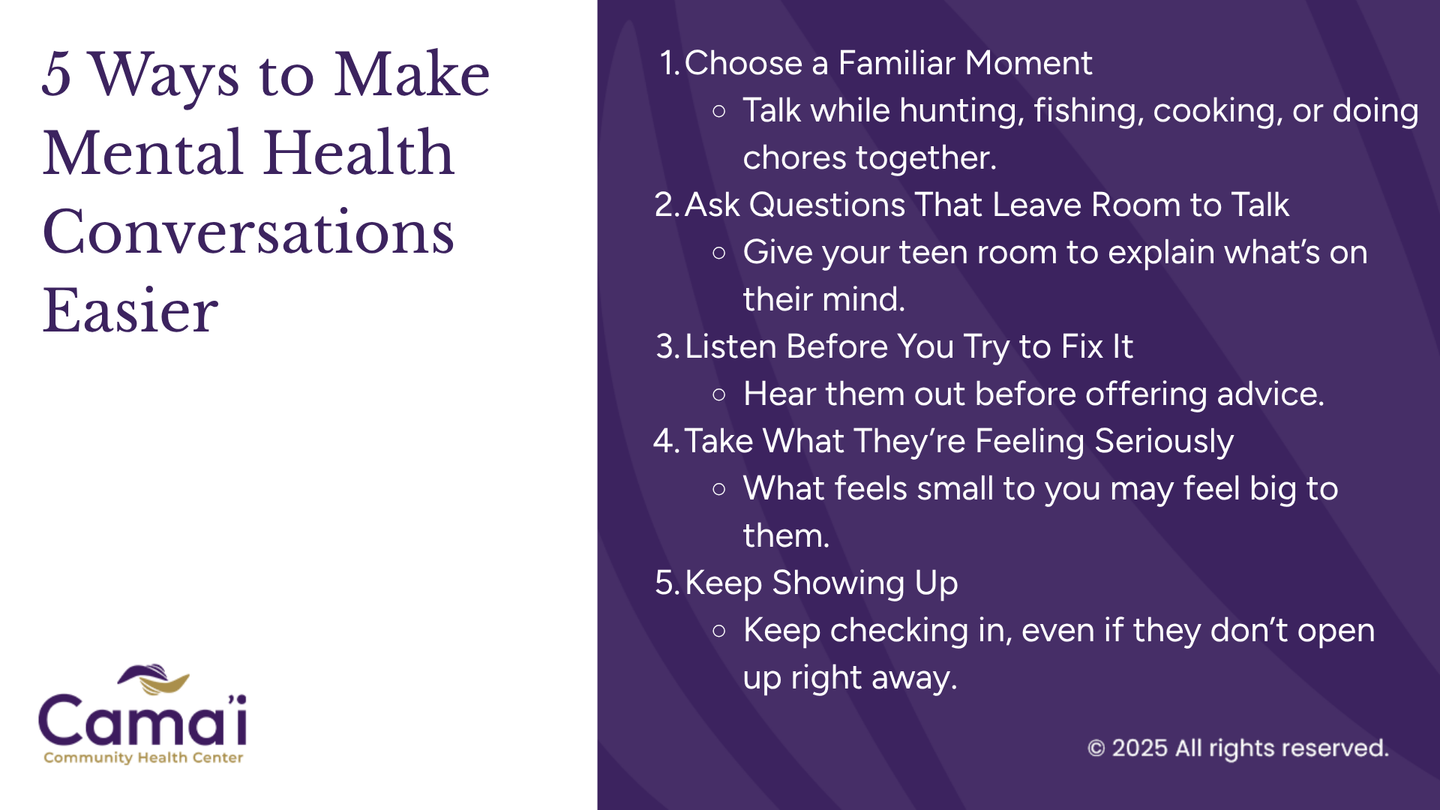
Choose the Right Moment to Talk
Sitting your teen down and saying, “We need to talk,” can make them feel like they’re in trouble before the conversation even begins. Sometimes it’s easier to talk when you’re doing something else together.
That might be while making dinner, walking somewhere, fishing, working on equipment, gathering berries, getting ready for a hunting trip, doing chores, or sitting together after everyone else has gone to bed.
You might simply say:
“I’ve noticed you’ve seemed stressed lately. How are things going?”
Or:
“You haven’t seemed quite like yourself lately. Is something bothering you?”
Your teen might shrug or say they’re fine. They may genuinely not know how to explain what they’re feeling yet. You don’t have to force the conversation. Let them know you noticed, you care, and you’re available when they’re ready.
Ask Questions That Leave Room for an Honest Answer
Questions like “Are you OK?” often lead to an equally short answer: “I’m fine.” Try asking questions that give your teen a little more room to explain what’s going on.
You could ask:
- “What’s been taking up most of your headspace lately?”
- “How are things going with your friends?”
- “What’s been the hardest part of school recently?”
- “Is anything making you feel especially stressed or overwhelmed?”
- “What would make things feel a little easier right now?”
You don’t need to ask everything at once. One genuine question followed by enough space for an answer can go much further than a long list of questions.
Listen Before Trying to Fix the Problem
It’s natural to want to make things better when your child is hurting. You may immediately start offering solutions, reassurance, or advice. But sometimes your teen needs you to listen first.
Try to understand what the situation feels like from their perspective, even when the problem seems manageable from an adult point of view. A friendship ending, a disappointing grade, conflict at home, bullying, or feeling left out can carry a lot of weight during adolescence.
You can say things like:
“That sounds like it’s been really hard.”
“I’m glad you told me.”
“Do you want me to help you think through what to do, or do you just need me to listen right now?”
Being heard and taken seriously can make it easier for a young person to keep talking instead of shutting down.
Make Mental Health Part of Everyday Conversation
Mental health can be easier to talk about when the subject doesn’t only come up after something goes wrong. Ask about stress alongside school and friends. Talk about what you do when you’re overwhelmed. Let your teen see that adults have hard days too and that asking for help isn’t something to be embarrassed about.
Families can also connect these conversations to the ways they already care for one another. For some families, that may mean spending time with grandparents or Elders. For others, it could be going fishing together, being outside, participating in cultural traditions, attending church, sharing meals, making art, listening to music, or simply being around extended family.
Young people and families also have support available through the local school. Cama’i has a school social worker who is available to youth of all ages, as well as parents, caregivers, and school staff. A young person does not have to attend Bristol Bay Borough School to receive her support. A Social Emotional Learning Coach is also available at the school.
Having those familiar, local resources gives families another place to start when something feels off or they simply want someone to talk to.
Pay Attention to Meaningful Changes
Teenagers change as they grow, and moodiness or wanting more independence can be a normal part of adolescence. The bigger concern is when something feels noticeably different for your child and stays that way.
Pay attention to changes such as:
- Persistent sadness, hopelessness, or irritability
- Pulling away from friends and family
- Losing interest in activities they normally enjoy
- Significant changes in sleeping or eating habits
- A sudden drop in school performance
- Frequent unexplained physical complaints
- Increased alcohol or drug use
- Intense anxiety or panic
- Signs of an eating disorder
- Self-harm
- Talking about death or suicide
You know your child. A single bad day may not be unusual, but a pattern of changes deserves a closer look.
Self-harm or suicidal thoughts should always be taken seriously. You don’t need to determine on your own whether your teen is “serious enough” to need help. Reach out to a healthcare professional or crisis resource for guidance.
Support Healthy Coping Outside the Conversation
Mental well-being isn’t built through conversations alone. Daily routines can make a difference in how teens manage stress and emotions. Teenagers aged 13 to 18 need eight to 10 hours of sleep each night for proper health, growth, and brain development. Consistent sleep routines, regular meals, physical activity, time outside, hobbies, and positive relationships can all support both physical and mental health.
Fishing, hunting, gathering, spending time on the land or water, helping relatives, learning from Elders, participating in cultural traditions, playing sports, making art, or simply being with cousins and friends can give teens connection and a sense of belonging.
Don’t prescribe those activities as a treatment. Pay attention to what helps your teen feel more like themselves and make room for it. Those connections don’t replace mental health treatment when it’s needed, but they can be an important part of a young person’s overall support system.
Know When Professional Help May Be Needed
Consider reaching out when mental health difficulties are persistent, getting worse, or interfering with school, relationships, sleep, eating, physical health, or daily life.
Early intervention gives young people an opportunity to understand what they’re experiencing and develop coping skills before problems become more difficult to manage. A mental health professional can also help determine whether symptoms may be related to anxiety, depression, an eating disorder, substance use, another mental health condition, or something else entirely.
Seeking professional help doesn’t mean you failed to support your child at home. Sometimes adding another trusted person to their support system is exactly what a teen needs.
Finding Mental Health Support in Rural Alaska
Accessing mental health care in rural Alaska looks very different from what it does in a larger city. Families may have fewer nearby providers, longer travel distances, and concerns about privacy in a small community. Those barriers can make asking for help feel harder, but families still have local places to turn.
One of Cama’i’s licensed clinical social workers specializes in youth and serves as the school social worker. She is available to youth of all ages, parents, caregivers, and school staff, whether or not the young person attends Bristol Bay Borough School. Cama’i’s Social Emotional Learning Coach is also available at the school, giving young people and families another familiar source of support within the community.
Families can also start with a teen’s primary care provider, school counselor, or another health care professional they trust. These providers can help families understand what level of care may be appropriate and what options are available.
Cama’i Community Health Center provides behavioral health support for individuals and families throughout the Bristol Bay region. The team can help families address mental health concerns, connect with additional services when needed, and find a path forward that fits their situation.
For an immediate mental health or suicide crisis, call or text 988 to reach the Suicide & Crisis Lifeline. Call 911 when there is immediate danger.
Keep the Conversation Going
Your teen may not tell you everything the first time you ask how they’re doing. They might shrug, change the subject, or insist that nothing is wrong. That doesn’t mean the conversation failed.
Keep showing up. Ask again another day. Spend time together without making every interaction about mental health. Pay attention to changes, celebrate the good days, and remind them through your actions that difficult days won’t make you disappear.
Sometimes the most important message a teenager can hear is a simple one: whatever you’re dealing with, you can talk to me about it.
Give your teen another trusted place to turn by connecting with Cama’i’s behavioral health team.