In rural Alaska, time outdoors is part of daily life. Whether you’re fishing, hiking, gathering berries, hunting, boating, or traveling between communities, being prepared for injuries matters. Even a small cut, twisted ankle, burn, or fish-hook wound can become more serious when you’re far from immediate medical care.
At Cama’i Community Health Center, we know that wilderness safety in rural Alaska starts with preparation, calm decision-making, and knowing when to seek emergency care. In Alaska’s wilderness, emergency medical rescue may be hours or even days away due to distance, weather, or limited transportation. That’s why basic first aid skills, communication planning, and awareness of local conditions are essential.
The goal is not to replace medical treatment, but to help you respond safely until professional care is available.
Don’t let a minor wilderness injury become a major problem—contact Cama’i for timely treatment and follow-up care.
Why Wilderness First Aid Matters in Rural Alaska
In Bristol Bay and surrounding communities, outdoor activities often happen in remote areas where cell service, transportation, and medical access may be limited. Alaska’s population density is just about one person per square mile, which means even a short trip outside town can quickly become remote.
Weather can also shift from mild to dangerous within hours. Rain, wind, fog, cold water, and sudden temperature changes can turn a minor injury into a serious situation if you are not prepared.
Common wilderness injuries include:
- Cuts and puncture wounds
- Fish-hook injuries
- Sprains and strains
- Burns
- Dehydration
- Insect bites or allergic reactions
- Falls
- Cold-water exposure
- Head injuries
Knowing basic first aid can help prevent infection, reduce pain, and keep an injury from getting worse.
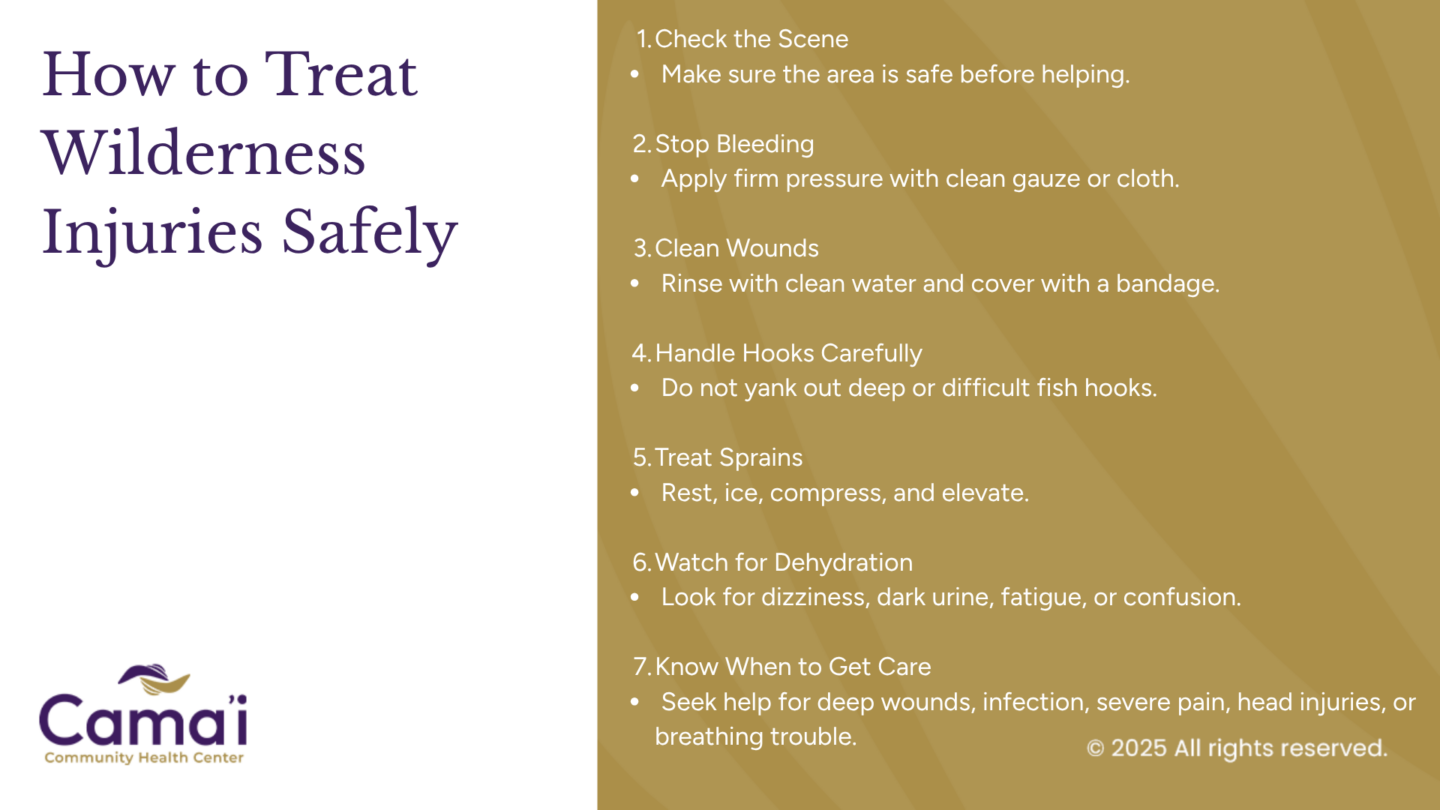
Step 1: Stay Calm and Check the Scene
Before helping someone, pause and make sure the area is safe. If there is danger from water, wildlife, unstable ground, fire, weather, or equipment, move carefully and avoid putting yourself at risk.
Check the injured person for:
- Responsiveness
- Breathing
- Heavy bleeding
- Signs of shock
- Head, neck, or back injury
If the person is unconscious, having trouble breathing, bleeding heavily, or showing signs of a serious injury, call emergency services right away if possible.
Because cell service can be unreliable in remote areas, carrying a satellite messenger or emergency communication device can be critical. Always notify someone of your specific trip plans before departing, including where you are going and when you expect to return.
Step 2: Prioritize Shelter, Water, and Warmth
In a survival situation, shelter comes first. Exposure to wind, rain, or cold can make injuries worse and increase the risk of hypothermia.
Pack emergency shelter, such as:
- A heavy-duty trash bag
- Emergency blanket
- Tarp
- Extra waterproof layers
Water sourcing is the second priority after shelter. Dehydration can worsen fatigue, confusion, and injury recovery. Fire can also be essential for warmth, signaling, and purifying water when conditions allow it.
Food matters, but it is usually not the immediate priority. The body can survive without food for several weeks, but exposure and dehydration can become dangerous much faster.
Step 3: Stop Bleeding Safely
For cuts, punctures, or deep scrapes, controlling bleeding is the first priority.
What to do:
- Wash your hands or use gloves if available
- Apply firm, steady pressure with clean gauze or cloth
- Elevate the injured area if possible
- Keep pressure on the wound until bleeding slows
- Cover with a clean bandage
What not to do:
- Do not remove deeply embedded objects
- Do not use dirty cloth or untreated materials if clean supplies are available
- Do not ignore bleeding that soaks through bandages
Seek care at Cama’i if the cut is deep, bleeding will not stop, was caused by a rusty or dirty object, or shows signs of infection.
Step 4: Clean and Cover Wounds
In the wilderness, infection is a real concern. Dirt, fish slime, river water, and bacteria can enter even small wounds.
Clean the wound by:
- Rinsing with clean water
- Removing visible dirt with clean tweezers
- Applying antiseptic if available
- Covering with a clean, dry bandage
Watch for infection signs:
- Redness
- Swelling
- Warmth
- Drainage or pus
- Increasing pain
- Fever
If a wound is not healing or looks worse after a day or two, come to Cama’i for evaluation.
Step 5: Handle Fish-Hook Injuries Carefully
Fish-hook injuries are common in Bristol Bay, and they can be tricky. Some hooks can be removed safely, but others need medical care.
Seek medical care if the hook is:
- Deeply embedded
- Near the eye, face, joint, tendon, or major blood vessel
- Difficult to remove
- Causing numbness or severe pain
What not to do:
- Do not yank the hook out
- Do not force removal if there is resistance
- Do not ignore the need for a tetanus update
Cover the area, keep it clean, and visit Cama’i for safe removal and wound care.
Step 6: Treat Sprains and Strains
Sprains and strains often happen from slips, falls, carrying gear, or walking on uneven ground.
Use the RICE method:
- Rest the injured area
- Ice with a cold pack wrapped in cloth
- Compress with an elastic bandage
- Elevate when possible
Avoid putting weight on the injury if there is severe pain, swelling, bruising, or instability.
Visit Cama’i if:
- Pain is severe
- You cannot walk or use the joint
- Swelling is significant
- Numbness or tingling occurs
- The injury does not improve
Step 7: Respond to Burns
Burns can happen around campfires, stoves, engines, hot water, or equipment.
For minor burns:
- Cool the burn with clean, cool water for 10–20 minutes
- Remove jewelry or tight clothing near the area
- Cover loosely with a clean bandage
- Avoid breaking blisters
What not to do:
- Do not use butter, oil, or toothpaste
- Do not apply ice directly to the burn
- Do not pop blisters
Seek emergency care if the burn is large, deep, on the face or hands, caused by chemicals or electricity, or affects breathing.
Step 8: Watch for Dehydration and Heat Stress
Even in Alaska, dehydration can happen quickly during summer activity, fishing, hiking, or long days outdoors.
Signs of dehydration include:
- Thirst
- Headache
- Dizziness
- Muscle cramps
- Dark urine
- Fatigue
- Confusion
What helps:
- Drink water regularly
- Use electrolytes during long activity
- Rest in shade when possible
- Avoid too much caffeine or alcohol
Seek care if someone is confused, fainting, vomiting, or unable to keep fluids down.
Step 9: Prevent Cold-Water and Weather Emergencies
Cold water is one of the biggest risks in Alaska. Cold water shock can incapacitate swimmers within minutes, even in summer. Drowning is also a serious risk when crossing rivers, boating, or fishing near deep water.
To stay safer:
- Wear a personal flotation device near cold Alaska waters
- Avoid risky river crossings
- Check weather and water conditions before leaving
- Dress in layers
- Pack waterproof gear
Alaska’s weather can change quickly, and evacuation from remote areas may be delayed by storms or poor visibility. Planning ahead protects you and the people traveling with you.
Step 10: Know the Signs of Shock
Shock can happen after injury, blood loss, allergic reaction, severe infection, or trauma.
Signs include:
- Pale or clammy skin
- Weakness
- Rapid breathing
- Confusion
- Dizziness
- Nausea
- Fainting
What to do:
- Call for emergency help
- Keep the person lying down
- Keep them warm
- Do not give food or drink if they may need emergency treatment
Shock can be life-threatening and needs urgent care.
Wildlife Safety: Preventing Injuries Before They Happen
Wildlife encounters are part of life in Alaska, but prevention is key. Keep a safe distance from bears and moose, and stay alert for signs of wildlife activity.
Bear safety tips:
- Watch for scat, tracks, and paw prints
- Make noise while hiking to avoid surprising bears
- Store food away from sleeping areas
- Carry bear spray on your body and keep it easy to reach
- Keep pets on a leash
Bear attacks are rare, averaging about one human death per year in North America, but they can be serious. If a bear charges, stand your ground and make noise unless otherwise directed by local wildlife guidance. Moose can also be aggressive, especially during rut in late September and October.
What to Keep in a Wilderness First Aid Kit
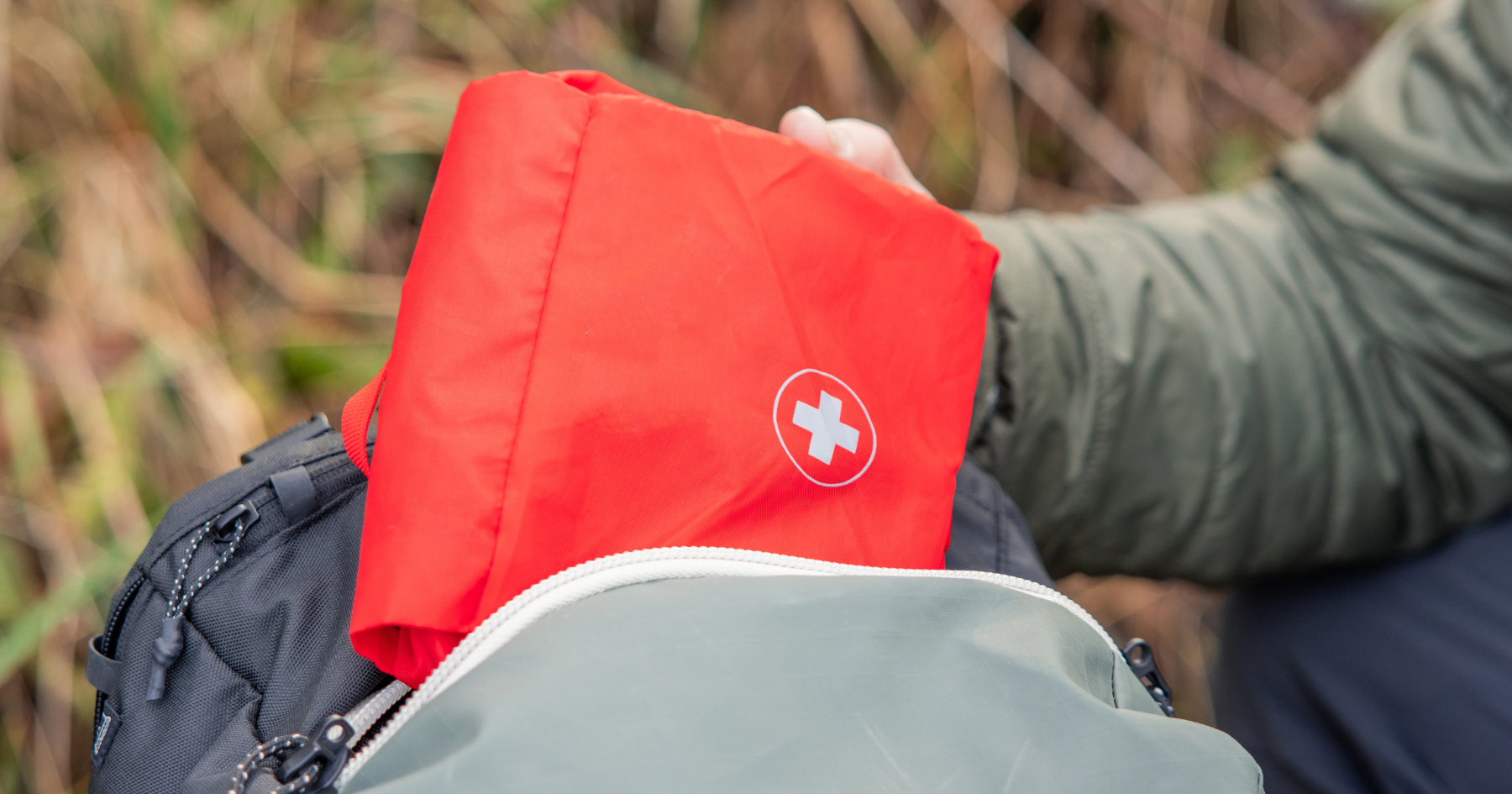
Every family, boat, vehicle, and outdoor group should have a basic first aid kit.
Include:
- Gloves
- Gauze and bandages
- Medical tape
- Antiseptic wipes
- Tweezers
- Small scissors
- Cold pack
- Elastic wrap
- Pain reliever
- Allergy medication
- Emergency blanket
- Heavy-duty trash bag
- Waterproof matches or lighter
- Clean water or water purification supplies
- Physical map and compass
- Personal medications
- Emergency contact information
Don’t rely only on your phone for navigation. In remote areas, a traditional map and compass are still essential.
Make sure you check your kit before each trip and replace expired or damaged items.
When Cama’i Emergency Care Is Needed
Come to Cama’i or seek emergency care if someone has:
- Heavy bleeding
- Deep cuts or puncture wounds
- Serious fish-hook injuries
- Signs of infection
- Head injury or loss of consciousness
- Severe pain or swelling
- Trouble breathing
- Chest pain
- Severe dehydration
- Suspected broken bone
- Severe allergic reaction
- Burns that are large or deep
If you’re unsure whether an injury needs care, it’s always better to ask.
Be Prepared Before You Go
Before heading into the wilderness:
- Tell someone where you’re going
- Bring a charged phone or satellite messenger
- Check weather and water conditions
- Carry a physical map and compass
- Travel in groups when possible
- Carry food, water, and extra layers
- Pack a first aid kit
- Know how far you are from help
Traveling in groups is safer because it creates more noise, reduces the chance of surprising wildlife, and ensures someone can help if an injury occurs.
Cama’i Is Here When You Need Care
Wilderness injuries can happen quickly, but knowing how to respond can make a major difference. Clean wounds early, control bleeding, protect injured areas, and seek medical care when symptoms are serious or worsening.
At Cama’i Community Health Center, we’re here to support families, workers, and outdoor adventurers across Bristol Bay with emergency care, primary care, wound care, and follow-up support.
Stay prepared for Alaska’s outdoors by visiting Cama’i for the care and resources your family needs to explore safely.