
The rural Alaskan diet has sustained communities for generations. Long before grocery stores reached remote villages, Alaska Natives thrived on fresh fish, wild game, berries, and wild greens harvested from the land and sea. In the Bristol Bay region, subsistence practices remain central to life — not only for food security, but for culture, identity, and health.
Today, however, many rural Alaskans face a complicated nutrition landscape. Store-bought processed foods are not very healthy and can be expensive. Fresh produce can be difficult to access, especially during winter. At the same time, chronic diseases such as diabetes and high blood pressure are rising across rural areas.
At Cama’i Community Health Center, we believe the path forward is not abandoning tradition — it’s strengthening it. By blending subsistence foods with thoughtful meal planning, smart preservation, and practical grocery strategies, families can build a diet that supports long-term health without sacrificing culture or flavor.
Connect with our dietary team to learn how traditional foods and smart planning can support your long-term health.
The Strength of Traditional Foods
Across rural Alaska, residents harvest an average of 295 pounds of wild food per person each year. That’s not just impressive — it’s nutritionally powerful.
The primary subsistence food is salmon, including prized Chinook salmon, followed closely by big game like caribou meat and moose. Coastal communities may rely more heavily on marine mammals, while inland regions focus on fish and land mammals.
These traditional foods are often described as nutritionally superior “superfoods” because they provide:
- High-quality protein
- Omega-3 fatty acids
- Essential vitamins
- Iron and other key minerals
- Healthy natural fat
Research shows that diets rich in fish, wild game, and berries are associated with lower rates of certain chronic diseases compared to diets high in added sugars and refined carbohydrates.
For generations, the Yup’ik and Iñupiaq peoples practiced subsistence hunting, fishing, and gathering. The Yup’ik diet traditionally centered on fish, birds, and land mammals, offering dense essential nutrients that supported physical endurance in demanding environments.
Traditional food practices are not outdated. They are resilient.
The Challenge of Processed Foods in Rural Areas
In many remote communities, approximately half of the food ingredients now come from stores. While commercial goods help fill gaps, heavy reliance on shelf-stable items often means higher intake of:
- Added sugar
- Refined bread products
- High-sodium canned meals
- Ultra-processed snacks
These changes contribute to rising rates of weight gain, diabetes, and high blood pressure across Alaska.
This doesn’t mean canned or frozen items are bad. In fact, canned and frozen vegetables can be valuable resources in rural Alaska, where fresh greens and tomatoes may not be available year-round. The key is choosing wisely and balancing them with traditional foods.
A healthy rural Alaskan diet blends:
- Wild-harvested foods
- Frozen vegetables
- Whole grains
- Lean protein
- Dairy or fortified alternatives
It’s not about perfection. It’s about proportion.
Meal Planning: A Practical Tool for Rural Alaska
In remote communities, meal planning is essential. Limited road access, unpredictable weather, and high grocery costs mean most people cannot shop frequently.
Smart strategies include:
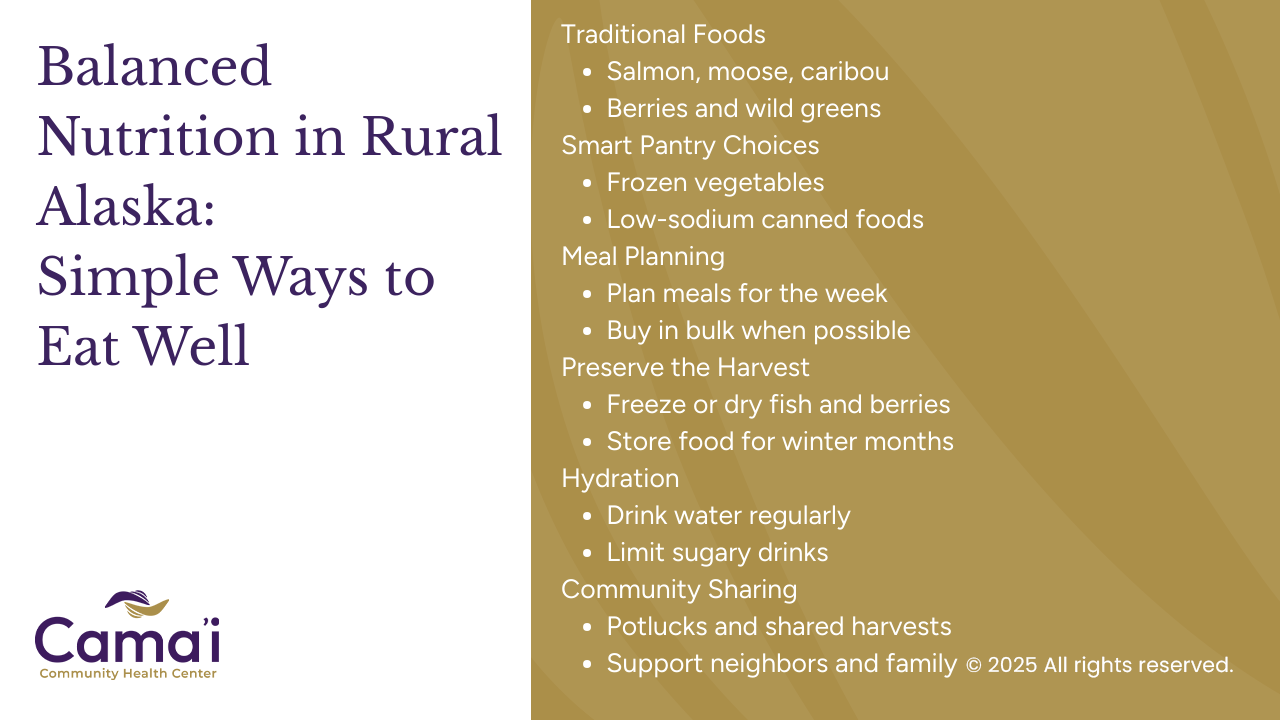
- Planning meals for the full week before shopping
- Buying in bulk when possible
- Preserving summer harvests for winter
Meal planning ensures families have enough food supplies and reduces reliance on last-minute processed options.
A balanced dinner might look like:
- Roasted salmon
- Potatoes
- Mixed frozen vegetables
Or:
- Moose stew with carrots and local greens
- Whole-grain bread
Simple, filling, nutrient-dense.
Food Preservation: The Backbone of Winter Nutrition
In rural Alaska, food preservation is more than tradition — it’s survival.
Common methods include:
- Drying fish
- Smoking salmon
- Freezing berries
- Canning vegetables
- Fermenting greens
Preserving the summer harvest ensures access to high-quality nutrients throughout the long winter months.
Without preservation, winter diets would rely almost entirely on store-bought food.
Preservation supports:
- Food security
- Cultural continuity
- Cost savings
- Nutritional stability
It also strengthens community bonds through shared labor and shared meals.
Growing and Buying Local
Emerging cultivation practices across Alaska include small-scale community gardens. Even in short growing seasons, residents can grow:
- Fresh greens
- Potatoes
- Tomatoes
- Herbs
Growing your own food improves quality and strengthens food sovereignty. When available, buying locally harvested produce enhances diet quality and supports community farmers.
Even adding one vegetable to dinner each night makes a measurable difference in nutrient intake. Here at Cama’i, we emphasize small steps, not dramatic overhauls.
The Role of Protein and Natural Fat
The traditional rural Alaskan diet is rich in protein from fish and game.
Fresh fish, especially salmon, provides omega-3 fatty acids that support heart health and reduce inflammation.
Game meats like moose and caribou provide iron and B vitamins critical for energy and immune function. Unlike many processed meats, wild game is generally leaner and free of additives.
Healthy natural fats from fish and marine mammals support brain function and hormonal balance.
The problem isn’t fat. The problem is highly processed fat combined with added sugar. Returning to natural protein sources helps reduce chronic disease risk.
Sugar, Refined Bread, and Chronic Disease
Increased access to sweetened beverages and processed bread products has shifted eating patterns across Alaska.
High sugar intake is strongly associated with:
- Diabetes
- Weight gain
- Cardiovascular disease
- Fatigue
Choosing whole-grain bread instead of white bread, limiting sugary drinks, and prioritizing whole foods reduces long-term health risks.
Research shows that when indigenous communities return to traditional diets, measurable improvements in blood sugar and medication needs can occur.
In fact, during the Native Foods Challenge, where students in Igiugig ate only traditional local foods for six weeks, participants reported weight loss and reduced diabetes medication use.
That’s powerful evidence that diet matters.
Hydration and Energy
Staying hydrated is vital for overall health and mood stability.
Even in cold climates, dehydration contributes to:
- Fatigue
- Poor concentration
- Headaches
Water supports digestion, circulation, and nutrient transport throughout the body. Hydration is one of the simplest improvements anyone can make.
Community and Food Sharing
In rural Alaska, food is rarely individual.
Communal meals and potlucks are common practices. Sharing harvests strengthens community ties and ensures elders and families have access to food.
Non-market food distribution, giving fish, meat, or berries to neighbors, is a cultural pillar.
Food is connection. Food is community. Shared meals improve mental health, reduce isolation, and preserve cultural identity.
A Balanced Plate in Rural Alaska
Consider this practical framework for balanced eating:
Half your plate:
- Vegetables or berries
One quarter:
- Lean protein (salmon, moose, eggs, caribou meat)
One quarter:
- Whole grains or potatoes
Include:
- Dairy or fortified alternatives
- Healthy fats in moderation
This supports stable blood sugar, muscle health, and sustained energy.
Unique Indigenous Staples
Traditional foods also include:
- Muktuk (whale skin and blubber)
- Agutaq (Eskimo ice cream)
- Seal oil
These foods are deeply cultural and nutrient-dense.
Balance and moderation allow traditional foods to remain part of a healthy lifestyle.
Addressing Chronic Diseases in the Bristol Bay Region
Rates of diabetes and cardiovascular disease are rising across Alaska, and diet plays a central role in prevention and management.
Reducing processed foods, increasing vegetables, maintaining protein intake, and planning meals in advance all help reduce risk.
Cama’i works with residents to:
- Manage diabetes
- Control high blood pressure
- Develop realistic meal plans
- Improve nutrient intake
- Support weight management
We meet families where they are.
How Cama’i Supports Long-Term Wellness
Cama’i Community Health Center offers:
- Nutrition counseling
- Diabetes management support
- Chronic disease care
- Education on balanced meal planning
- Support for food access challenges
Our approach to nutrition blends modern medical knowledge with respect for traditional subsistence practices.
We understand that life in rural Alaska is different. Access is different. Culture is different.
Health care must reflect that.
Honoring Tradition While Protecting Health
The strength of the rural Alaskan diet has always been its connection to the land, the water, and the community.
By combining traditional foods, smart meal planning, preservation methods, and thoughtful use of store-bought goods, families in rural Alaska can build a diet that protects their health, supports their family, and honors generations of knowledge.
Healthy eating is not about restriction. It’s about resilience. And in Bristol Bay, resilience runs deep.
Reach out today to strengthen your family’s health with balanced nutrition rooted in culture and community.