
A great fishing season in Bristol Bay doesn’t just depend on the size of the catch — it depends on your strength, endurance, and ability to stay healthy from the first launch to the final haul.
Whether you’re heading out on a commercial boat, preparing for a recreational fishing trip, or planning long days of fly fishing along the river, your body will be under stress. Long hours standing, repetitive casting, hauling gear, changing weather conditions, and working near deep water all increase the risk of injury and fatigue.
These fishing season health tips are designed to help anglers stay strong, pain-free, and prepared — so you can focus on the adventure, not recovery.
Prepare your body and reduce injury risk by scheduling a pre-season checkup at Cama’i.
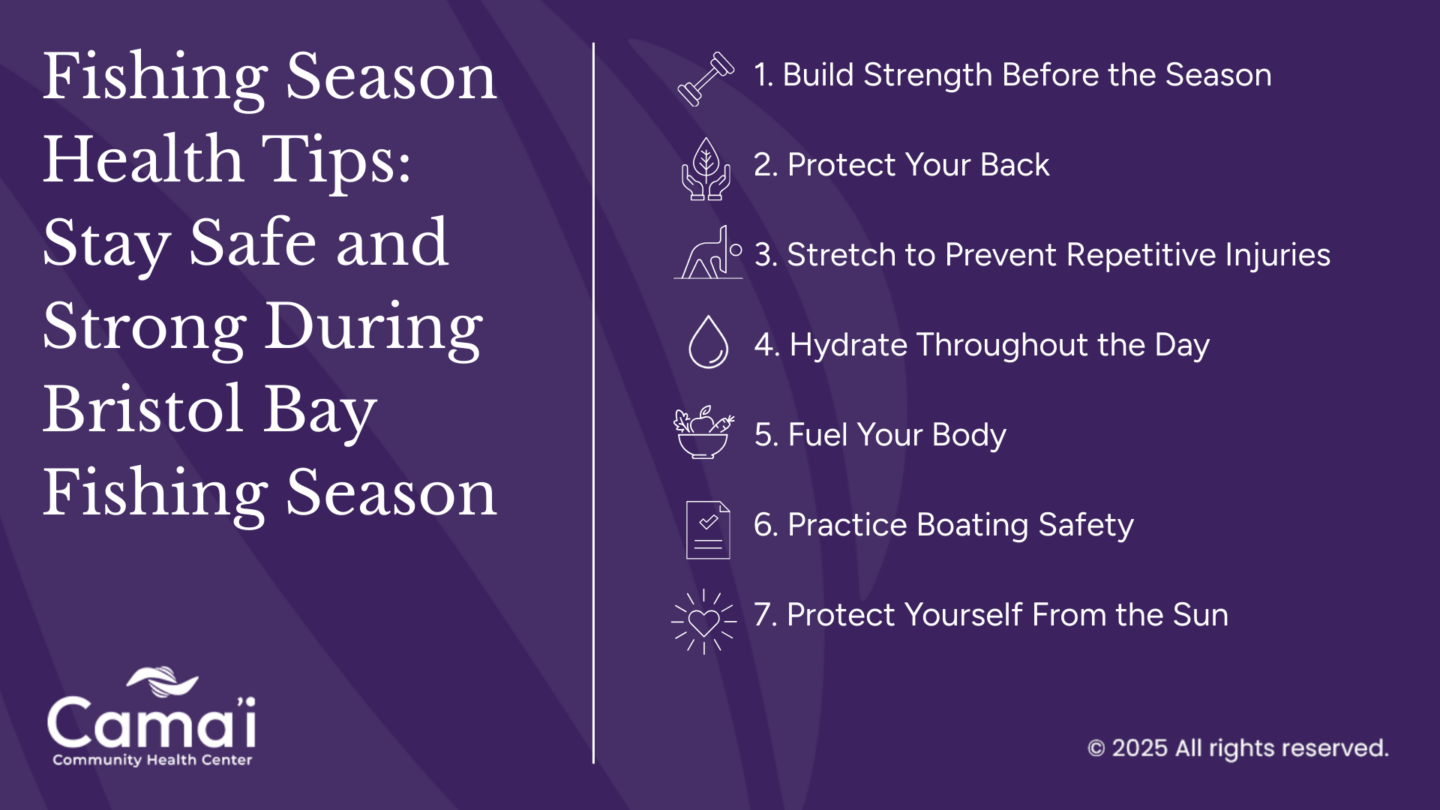
1. Build Strength and Stability Before the Season Starts
Fishing may not look like a high-impact sport, but it challenges your body in subtle, repetitive ways. Many anglers experience back injuries, rotator cuff strains, tennis elbow, muscle cramps, and shoulder pain due to long hours of casting, bending, and standing.
Preparing your body now reduces your injury risk later.
Focus on:
- Planks to strengthen core stability
- Squats and lunges to build leg strength
- Resistance band rows to support the shoulders
- Balance exercises to improve stability on a moving boat
Standing on a rocking boat requires strong legs and balance. Stability training helps prevent falls and improve mobility during fishing activities.
Imagine standing on deck for 12 hours — your core and legs are working constantly. Strengthening these muscles helps keep you pain-free through the season.
2. Protect Your Elbows, Wrists, and Shoulders
Repetitive casting, reeling, and handling equipment put stress on the wrist extensors and shoulder muscles. This is why many anglers develop tennis elbow or rotator cuff irritation during peak season.
To prevent tendinitis and overuse injuries:
- Perform wrist extensor stretches daily
- Stretch forearms before and after casting
- Rotate casting arms when possible
- Incorporate shoulder mobility exercises
A simple wrist extensor stretch — arm straight, palm down, gently pulling fingers back — can help prevent elbow pain.
Stretching and mobility exercises help reset muscle imbalances caused by repetitive fishing movements.
If you feel sharp pain or lingering discomfort, seek care early. Small strains can quickly become chronic injuries.
3. Lift Smart to Prevent Back Injuries
Back injuries are one of the most common fishing-related problems seen during the Bristol Bay fishing season.
Hauling nets, lifting totes, bending over coolers, and twisting while carrying weight increases risk — especially when fatigue sets in.
Preventing injury starts with:
- Bending at the hips and knees, not the waist
- Keeping gear close to your body
- Avoiding twisting while lifting
- Asking for help with heavy loads
Strengthening exercises such as deadlifts (with proper form) and core work can help alleviate back discomfort experienced after long days of fishing.
Mobility matters too. Tight hips and hamstrings increase strain on the lower back.
If you’ve had back issues before, consider a pre-season visit to Cama’i to assess your risk.
4. Hydrate Consistently — Even in Cool Weather
Many anglers underestimate hydration during cooler fishing conditions. But dehydration happens even when it’s cold.
Long hours in the wind and sun increase fluid loss. Muscle cramps, fatigue, headaches, and poor reaction time often trace back to dehydration.
Staying healthy during fishing season requires:
- Drinking water at regular intervals
- Limiting alcohol and caffeine
- Adding electrolytes on long fishing trips
- Seeking shade when needed
Hydration is crucial for maintaining energy levels and preventing muscle cramps during long fishing days.
Alcohol may seem like part of fishing culture, but it increases dehydration and impairs balance, especially dangerous near deep water.
Proper hydration can make a noticeable difference in how you feel while traveling, angling, and spending long days outdoors.
5. Fuel Your Body for Long Hours
Nutrition plays a key role in maintaining energy and preventing injuries.
Fishing burns more calories than many realize. Without proper fuel, your body fatigues faster and coordination declines.
Eat:
- Lean proteins such as fish, eggs, chicken, or moose
- Whole grains for sustained energy
- Fruits for quick carbohydrate support
- Healthy fats for long-lasting fuel
Proper nutrition can help prevent fatigue and muscle cramps during extended fishing activities.
For immune support during travel-heavy fishing season, Vitamin C and zinc can be beneficial.
Planning ahead for hydration and nutrition improves overall health throughout the season.
6. Practice Boating Safety Every Time
Boating safety is not optional during fishing season.
National outdoor safety experts note that many fishing-related emergencies stem from preventable risks — including lack of flotation devices and unprotected sun exposure — especially when anglers underestimate changing weather or water conditions.
Always:
- Wear life jackets when fishing from a boat
- Carry a basic first aid kit and know how to use it
- Share your location with a friend or family member
- Check weather conditions before leaving
- Avoid fishing during storms or extreme weather
Rescheduling your trip is always better than risking severe weather conditions.
Protecting yourself from sun exposure is equally important. Many anglers forget how intense UV reflection can be off the water.
Use:
- SPF 50+ sunscreen
- UPF-rated long sleeves
- Polarized sunglasses
- Hats and protective gear
Seek shade when possible to avoid heat exhaustion.
Being aware of your environment, including currents, shoreline stability, and wildlife, reduces unnecessary danger.
7. Prepare for the Unexpected
Fishing trips, especially in remote parts of Bristol Bay fisheries, require preparation.
Carry:
- A stocked first aid kit
- Extra water
- Protective clothing
- Communication equipment
- Backup safety gear
Staying safe means staying prepared.
Mental Health Matters Too
Fishing season can be physically demanding — but it can also strain mental health.
Long hours, financial pressure, changing weather, and unpredictable catch results can create stress.
Watch for:
- Increased irritability
- Fatigue beyond normal exhaustion
- Withdrawal from crew or family
- Increased alcohol use
Staying healthy includes taking care of your mind. If stress begins affecting your mood, sleep, or overall health, Cama’i offers behavioral health support for individuals and families in Bristol Bay.
You do not have to wait for a crisis to ask for help.
Strength + Safety = A Great Fishing Season
Fishing is an adventure. It’s livelihood. It’s tradition. It’s a connection to nature. But it is also demanding.
By building strength, protecting your shoulders and back, staying hydrated, fueling properly, practicing boating safety, and preparing for emergencies, you dramatically reduce your injury risk.
Your body is essential equipment. Maintaining your health ensures you can enjoy the catch and the season, safely.
If you want help preparing for fishing season, Cama’i Community Health Center is here to support you with preventive care, injury evaluation, wound care, and behavioral health services.