
Keeping track of childhood vaccinations can feel overwhelming. Some vaccines require several doses, others are given only at certain ages, and recommendations may vary based on a child’s health history, previous vaccinations, travel plans, or other risk factors.
For families in Naknek and throughout the Bristol Bay region, appointments may also require planning around school, work, weather, and transportation. Reviewing your child’s immunization record before school begins can prevent last-minute delays and give you time to ask questions.
At Cama’i Community Health Center, our providers can review your child’s records, explain what is recommended, and create a catch-up plan when necessary. You do not need to figure out the vaccine schedule alone.
Schedule an immunization review with Cama’i to make sure your child is prepared for the year ahead.
Why Childhood Vaccines Matter
Vaccines prepare the immune system to recognize and respond to diseases before a child is exposed. This is especially important for babies and young children whose immune systems are still developing.
The State of Alaska notes that vaccination is one of the most effective ways to protect children from serious diseases and help protect vulnerable people around them.
Vaccination can help prevent illnesses that may cause:
- Severe breathing problems
- Brain or spinal cord infections
- Long-term disability
- Hospitalization
- Death
Vaccines also protect the wider community. When more children are vaccinated, diseases have fewer opportunities to spread through classrooms, sports teams, families, and shared spaces.
This protection matters for infants who are too young for certain vaccines, people with weakened immune systems, pregnant people, elders, and others at greater risk of serious illness.
Which Vaccines Does My Child Need?
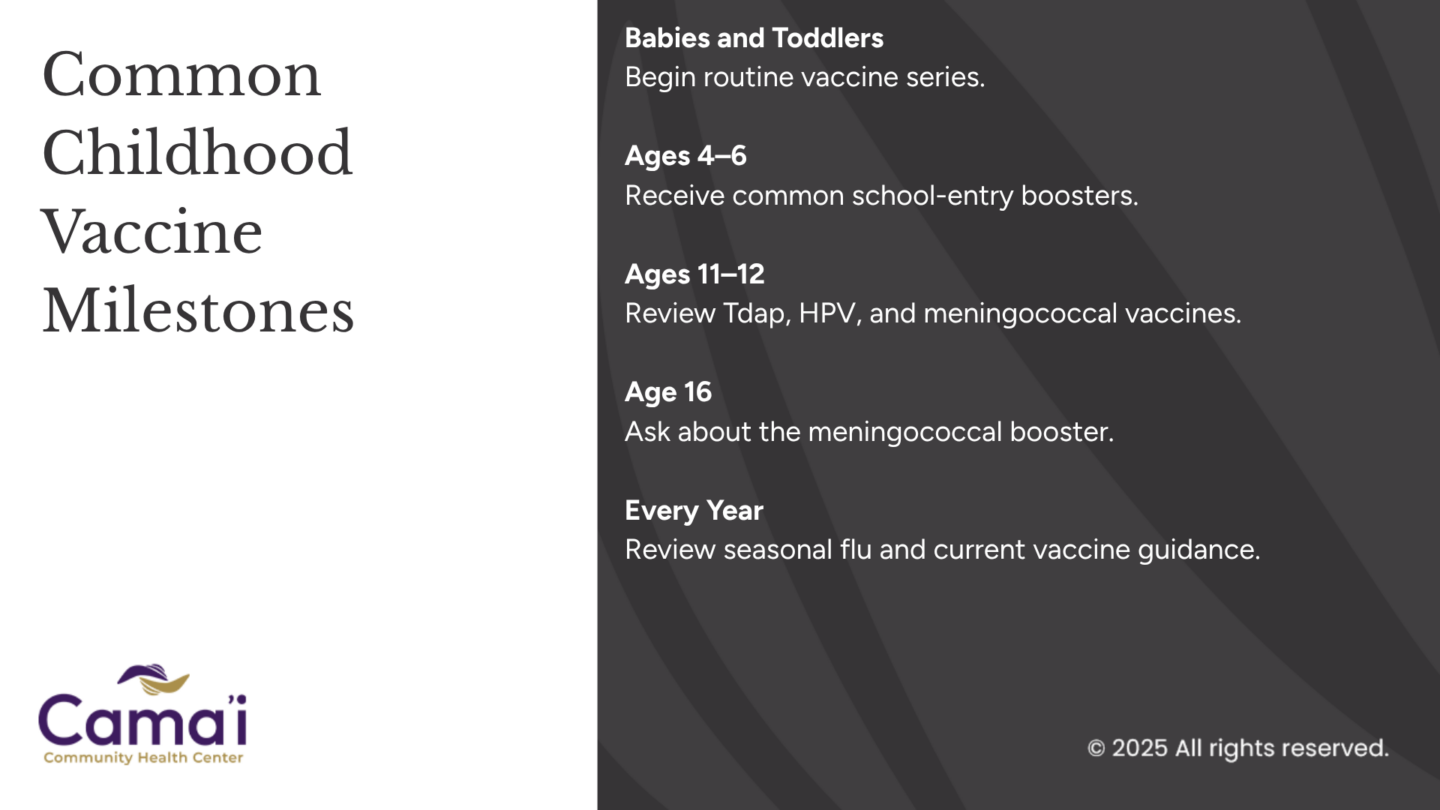
The answer depends on your child’s age and vaccination history. The routine childhood schedule begins at birth and continues through the teenage years. Additional recommendations may apply to children with certain medical conditions, travel plans, or missed doses.
The following overview covers common milestones, but your child’s provider should make the final recommendation.
Vaccines for Babies and Toddlers
The first two years include several vaccines because infants are particularly vulnerable to serious infections.
Routine childhood vaccines may protect against:
- Hepatitis B
- Rotavirus
- Diphtheria, tetanus, and pertussis
- Haemophilus influenzae type b
- Pneumococcal disease
- Polio
- Measles, mumps, and rubella
- Chickenpox
- Hepatitis A
Many of these vaccines require more than one dose. Each dose builds or strengthens protection, making the recommended timing important.
Influenza vaccination is generally recommended every flu season beginning at 6 months of age. Families should also ask their provider about current COVID-19 and RSV guidance.
Vaccines for Preschool and Early Elementary Ages
Between ages 4 and 6, many children receive booster doses before beginning elementary school.
These commonly include boosters for:
- Diphtheria, tetanus, and pertussis
- Polio
- Measles, mumps, and rubella
- Chickenpox
Boosters reinforce protection from earlier doses. This is also a good time to review the full record and identify anything missed during infancy or toddlerhood.
Families shouldn’t assume a child is fully vaccinated simply because they received vaccines as a baby. Some vaccine series continue for several years.
Vaccines for Preteens and Teens
Around ages 11 and 12, providers commonly review:
- Tdap
- HPV vaccination
- Meningococcal vaccination
- Annual influenza vaccination
The HPV vaccine helps prevent infections that can lead to several cancers later in life. It works best when given before likely exposure to the virus.
Teenagers may need an additional meningococcal dose around age 16. Some adolescents may need other vaccines because of health conditions, travel, living arrangements, or missed childhood doses.
Alaska School and Child Care Requirements
Alaska’s immunization requirements apply to public and private schools, child care facilities, and Head Start programs. Families may need to provide official documentation showing that required doses are complete or that an approved exemption applies.
Vaccines recommended for health protection and vaccines required for school are closely related, but they are not always identical. A child may meet minimum school requirements while still being eligible for additional recommended protection.
Because requirements can change, avoid relying on an old checklist or another child’s schedule. Bring your child’s current record to Cama’i so a provider can compare it with current Alaska requirements.
What if My Child Is Behind?
Falling behind doesn’t usually mean your child must restart an entire vaccine series.
A provider can often continue from the last documented dose and create a catch-up schedule based on:
- Your child’s age
- Previous doses
- Time since the last dose
- Medical conditions
- Travel or other risk factors
Delays happen for many understandable reasons, including illness, transportation problems, weather, moves, missing records, and limited appointment availability.
The important thing is to reconnect with care and make a realistic plan.
What Should Parents Know About Vaccine Safety?
Parents deserve clear answers about what their child receives and why.
Before vaccination, your provider may review:
- Previous reactions
- Allergies
- Current illness
- Medications
- Immune system conditions
- Other health concerns
Most side effects are mild and temporary. A child may experience soreness, fatigue, fussiness, a mild fever, or a headache.
Serious reactions are uncommon. Seek emergency help for difficulty breathing, facial or throat swelling, widespread hives, severe weakness, or loss of consciousness.
Your Cama’i provider can explain expected reactions and answer questions based on your child’s health history.
What Are the Risks of Delaying Vaccines?
Delaying or skipping vaccines can leave children unprotected when they may be most vulnerable.
It may also increase the risk of:
- Serious illness or complications
- Missing school and activities
- Spreading disease to vulnerable relatives
- Hospitalization
- Community outbreaks
- School enrollment delays
Diseases such as measles and whooping cough can return when vaccination rates fall or infections enter a community through travel.
Rural communities may face additional challenges during outbreaks because hospital care, medical transportation, and specialty services may be far away. Prevention is especially valuable when advanced care is difficult to reach.
How Can I Find My Child’s Vaccination Record?
If you cannot find a paper copy, the Alaska Department of Health recommends:
- Accessing records through the Docket app or web service
- Requesting records from your healthcare provider
- Contacting the Alaska Immunization Program
Bring every record you have to the appointment, even if it seems incomplete. Avoid guessing which vaccines your child received.
Keep an updated copy after each appointment for school, sports, travel, child care, and future healthcare visits.
What if Cost Is a Concern?
Cost shouldn’t prevent a child from receiving recommended protection.
Alaska’s Vaccines for Children program provides vaccines at no cost to eligible children under 19, including children who are:
- Medicaid eligible
- American Indian or Alaska Native
- Uninsured
- Underinsured
Federally Qualified Health Centers may also offer income-based assistance. Additional office or administration fees may apply, so families should contact Cama’i with questions about insurance, eligibility, or payment options before the appointment.
How Cama’i Helps Families Stay on Schedule
At Cama’i Community Health Center, immunization care is about more than administering a shot. Our team helps families understand what their child needs and why.
We can help with:
- Reviewing vaccination records
- Identifying overdue doses
- Creating catch-up schedules
- Discussing benefits and side effects
- Providing school documentation
- Coordinating vaccines with well-child visits
- Answering insurance and payment questions
Combining an immunization review with a routine checkup also gives families time to discuss growth, nutrition, sleep, development, behavioral health, medications, and other concerns.
There is no judgment if your child is behind or if you have questions. Clear, respectful conversations help families make informed decisions.
Protect Your Child for the Year Ahead
The vaccine your child needs this year depends on their age, previous doses, health history, and individual risks. Rather than relying on memory or a generic checklist, schedule an appointment and bring any available records.
Cama’i Community Health Center is here to help families throughout Naknek and the Bristol Bay region navigate childhood immunizations with practical guidance and compassionate care.
Not sure which vaccines your child needs? Bring their records to Cama’i and let our team help you build the right plan.