
When temperatures fall and daylight disappears, staying healthy in rural Alaska requires more than just bundling up. From frostbite prevention to nutritious winter eating, Alaskans face seasonal challenges that demand proactive care. And for residents of the Greater Naknek area, winter can add stress to everyday routines—especially when it comes to accessing care, staying active indoors, or navigating long, cold nights.
At Cama’i Community Health Center, we understand the unique conditions our communities face. Whether you’re a subsistence hunter, a busy parent, or an elder navigating chronic conditions, this guide is here to help you protect your health, energy, and well-being throughout the winter months.
Make nutrition and activity a priority this season—our providers can help you build a routine that works. Reach out to us today.
Why Winter Wellness Matters in Rural Alaska
In Alaska, winter doesn’t just mean snow—it means shortened daylight, extreme cold, icy roads, and increased risk of injuries, illness, and isolation. For communities where transportation and food access are already challenges, the season adds an extra layer of complexity.
That’s why winter wellness is about more than just staying warm. It’s about preparing your home, your body, and your mind for the months ahead.
Preventing Cold-Weather Injuries and Emergencies
Frostbite, hypothermia, and even carbon monoxide (CO) poisoning are real risks in Alaskan winters.
Cold-Weather Injury Prevention Tips:
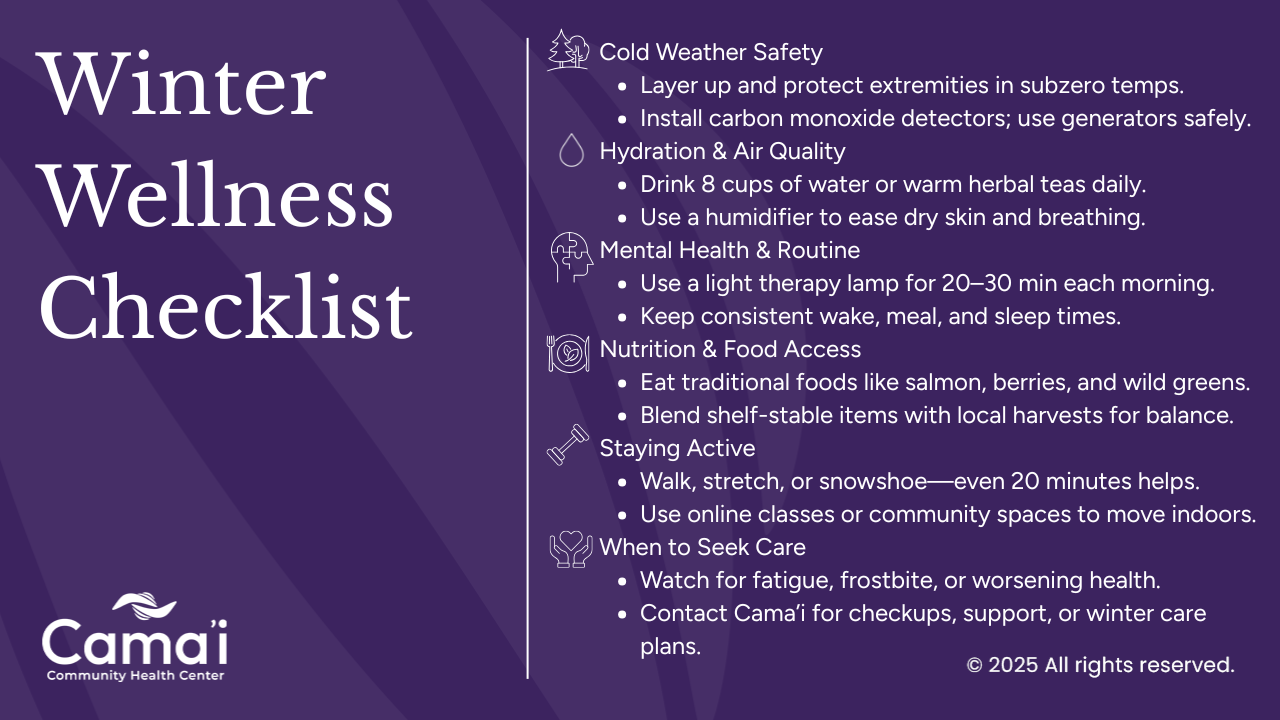
- Dress in layers: moisture-wicking base, insulating middle, windproof outer.
- Keep hands, feet, ears, and nose covered with insulated gear.
- Change out of wet clothes as soon as possible.
- Install carbon monoxide detectors in your home.
- Never use generators, propane heaters, or run a vehicle in an enclosed space.
If you experience numbness, pale or grayish skin, or extreme cold sensitivity, seek care immediately. Cama’i offers same-day care for minor injuries before they become serious problems.
Staying Active: Indoor and Outdoor Movement Ideas
Physical activity helps regulate your mood, improve sleep, and support immune function. But when it’s dark and freezing outside, staying active takes creativity.
Indoor Activities:
- Home workouts: stretching, chair yoga, online classes
- Dance sessions with family
- Light strength training using soup cans or water jugs
Outdoor Options:
- Snowshoeing, walking, or cross-country skiing
- Walking with cleats or microspikes for traction
- Biking with winter tires (for experienced riders)
Just 30 minutes of movement a day can reduce anxiety, improve sleep, and lower the risk of chronic disease.
Eating Well with Limited Access to Fresh Foods
During the winter, food security becomes a top concern in many rural Alaska communities. Limited deliveries and high costs often reduce access to produce and protein-rich foods.
At Cama’i, we recommend blending traditional foods with shelf-stable staples for balanced nutrition.
Smart Winter Nutrition Tips:
- Eat traditional foods like salmon, moose, seal, berries, and wild greens for their high nutrient value.
- Preserve foods through freezing, pickling, or fermentation to extend seasonal harvests.
- Choose canned vegetables and dried legumes with low sodium.
- Add one extra vegetable per meal as a small but impactful habit.
- Prepare shared meals and cook with elders when possible—these moments strengthen both health and community connection.
For personalized help, Cama’i’s dietitian team can help you build a winter meal plan based on what’s available to you.
Hydration, Humidity, and Dry Winter Air
Even in cold weather, hydration is essential. Many people drink less in winter because they don’t feel as thirsty, but this leads to fatigue, dry skin, and poor digestion.
- Aim for at least 8 cups of water or herbal tea daily.
- Use a humidifier in your home to prevent dry skin, cracked lips, and respiratory irritation.
- Limit caffeine and alcohol, which can dehydrate the body.
Your body’s ability to function at its best starts with water—don’t skip it just because it’s winter.
Light, Routine, and Mental Health in Alaska’s Darkest Months
Limited sunlight during the winter can disrupt your body’s internal clock, leading to seasonal affective disorder (SAD). Common symptoms include:
- Oversleeping or low energy
- Loss of interest in favorite activities
- Changes in appetite or weight
- Feelings of hopelessness or irritability
Simple Tools to Support Your Mental Health:
- Use a light therapy lamp daily in the morning (20–30 minutes recommended)
- Maintain a consistent routine: same wake, meal, and bedtimes each day
- Monitor your vitamin D levels—ask Cama’i about supplementation
- Stay socially connected, even virtually, to combat isolation
Cama’i also connects patients with telepsychiatry services and behavioral health screenings. If transportation is difficult, you can still get the support you need—remotely, safely, and confidentially.
Illness Prevention: Boosting Immunity and Staying Protected
Winter illnesses like flu, COVID-19, and RSV are more common when we’re indoors and in close contact. Prevention is key, especially for elders and those with chronic conditions.
Stay ahead of seasonal illness:
- Get your flu shot and COVID booster—Cama’i offers both
- Wash hands regularly and cover coughs/sneezes
- Stay home when you feel sick
- Wear a mask if caring for someone who is vulnerable
Keeping yourself healthy also helps protect your family, neighbors, and community.
Community and Emotional Resilience
Long winters can make people feel disconnected or isolated, especially those who live alone or are grieving a lost loved one. But community support makes a powerful difference.
Cama’i encourages:
- Attending small community events (when safe)
- Joining or forming a peer support group
- Sharing stories, recipes, or traditions that foster belonging
- Calling a friend or family member when you’re feeling down
Shared meals and intergenerational cooking not only help meet nutritional needs, but also strengthen mental resilience and family bonds.
Emergency Preparedness: Be Winter-Ready at Home
When storms hit or power goes out, being ready can prevent medical emergencies.
Prepare an emergency kit with:
- 3–7 days’ worth of non-perishable food and water
- Flashlights, extra batteries, and blankets
- First-aid supplies and essential medications
- A phone charger or solar power bank
- A battery-powered carbon monoxide detector
Talk with your provider if you need extra medication or medical supplies to have on hand in case of weather delays.
Cama’i: Here for Primary Care, Not Just Emergencies
Cama’i offers full-spectrum care for all ages and needs. We’re not just a clinic for when something’s wrong—we’re your partner in preventive health and long-term well-being.
Services we offer include:
- Annual wellness visits
- Immunizations and lab work
- Behavioral health screenings and therapy
- Chronic condition management
- Women’s and men’s health
- Pediatric and elder care
- Nutrition and diabetes support
Our sliding scale fees, same-day appointments, and community-based staff make care accessible and welcoming for everyone.
Winter Wellness Is a Community Effort
No one gets through winter alone, and you don’t have to. At Cama’i Community Health Center, we take a holistic approach to care that blends modern medicine with traditional foods, community support, and local wisdom.
Even small actions, like adding a vegetable to your plate, stepping outside during daylight, or checking in with a provider, can have a big impact over the long winter months. We’re here to help you take those steps with confidence, in a way that honors your time, your culture, and your goals.
So if you’re feeling tired, isolated, unsure, or overwhelmed, know that you’re not alone. Whether you’re managing a chronic condition, coping with stress, or simply trying to stay well through the darker season, our team is here—with compassion, expertise, and community-based support.
Let’s get through this winter together—healthy, grounded, and supported. Contact Cama’i today.