

When someone you care about is struggling, you may notice it in small ways first. Maybe they’ve stopped coming around as much. They aren’t joining family for meals, going out hunting or fishing, showing up at school events, visiting Elders, or spending time with the people they’re usually close to. They can be quieter, more irritable, or simply seem different.
In a small community, those changes can be easier to notice because people’s lives are often closely connected. At the same time, asking someone about their mental health can still feel uncomfortable, especially when you know their family, see them regularly, or worry about saying the wrong thing.
Suicide prevention can start with something as simple as noticing that change and checking in. You don’t have to be a behavioral health professional to ask a friend, cousin, sibling, neighbor, student, coworker, or someone else in your community how they’re really doing.
In rural Alaska, support comes from family, Elders, Tribal and cultural connections, faith communities, local health aides, behavioral health providers, teachers, coaches, or other people someone already knows and trusts. Those relationships can matter deeply when someone is feeling isolated or overwhelmed.
If you’re worried about someone you love, Cama’i Community Health Center is here to help you understand your options and connect them with behavioral health support.
Why Suicide Prevention Matters in Rural Alaska
Getting mental health support looks very different in rural Alaska than it does in a larger city.
A person may live hours away from the nearest hospital or behavioral health provider. Travel may depend on a plane, boat, snowmachine, weather conditions, or whether someone can get away from work and family responsibilities. In some areas, only a small number of health professionals are available locally.
That’s one reason having behavioral health care close to home matters so much. Cama’i has a fully staffed mental health department available on site, including two licensed clinical social workers. One specializes in working with youth and also serves as the school social worker, creating another point of connection for young people. The team also includes an SELC, giving individuals and families several ways to access support without first having to leave the area.
Those local resources work alongside the relationships that already support people throughout rural Alaska, including family, Elders, Tribal and cultural connections, schools, faith communities, and other trusted people.
American Indian and Alaska Native communities have also been deeply affected by suicide. At the same time, culture, family, language, spirituality, connection to the land, and Tribal traditions can all be important sources of strength.
Alaska’s Statewide Suicide Prevention Plan 2023–2027 similarly emphasizes strengthening social connections, reducing risk factors, supporting healthy development, and improving access to care before someone reaches a crisis.
Knowing some of the warning signs can help families recognize when it may be time to check in.
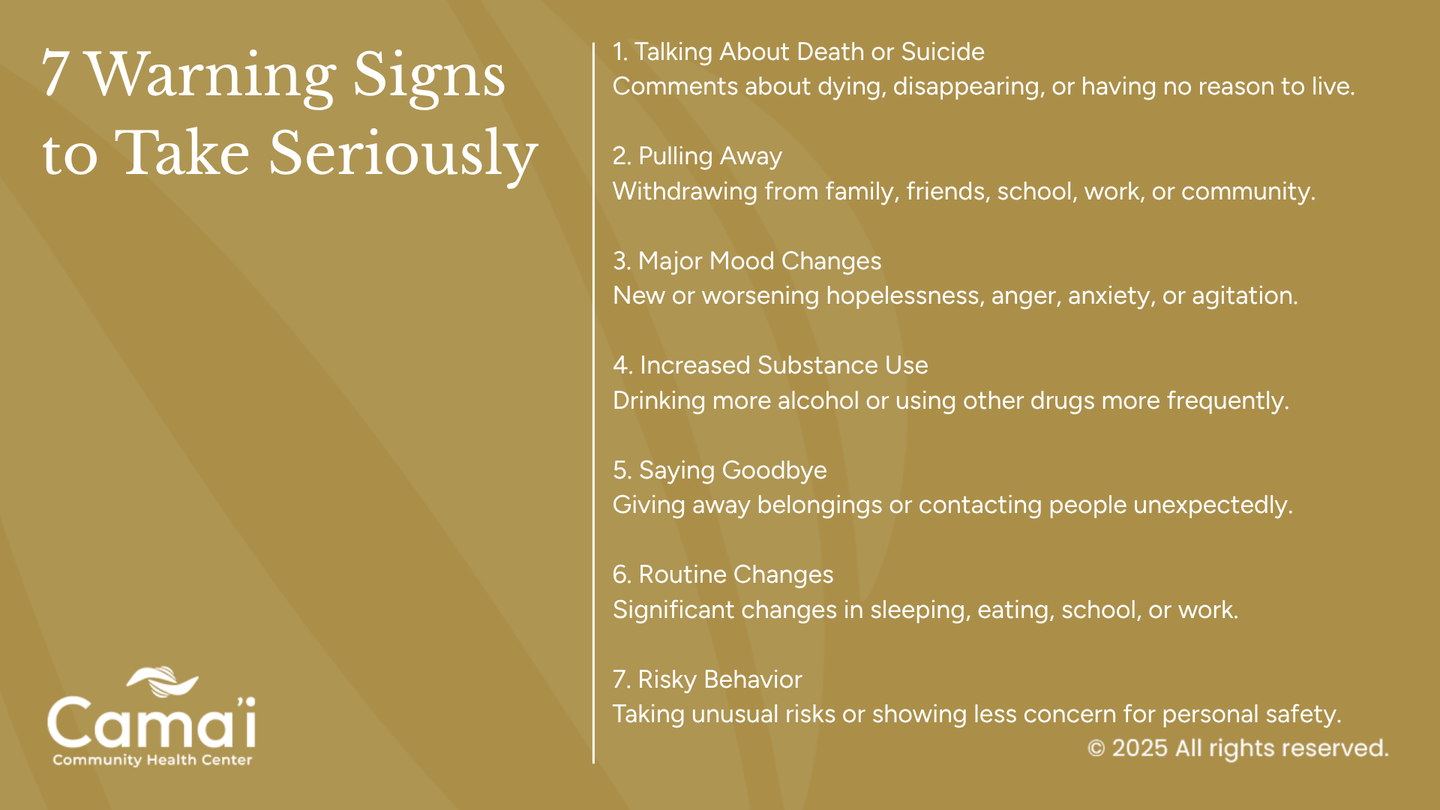
1. Talking About Wanting to Die or Feeling Hopeless
Take statements about suicide, death, or having no reason to live seriously, even if the person says them casually or later tries to brush them off.
Someone may say things like:
- “Everyone would be better off without me.”
- “I can’t do this anymore.”
- “There’s no point.”
- “I wish I could disappear.”
They also may talk about feeling trapped, being a burden, or believing that their situation will never improve.
Not everyone who is thinking about suicide will say so directly. Pay attention to conversations, texts, social media posts, or repeated comments that suggest someone has lost hope or doesn’t see a future for themselves.
2. Withdrawing From Friends, Family, and Community
Everyone needs time alone sometimes, so withdrawal by itself doesn’t necessarily mean someone is suicidal. What matters is whether you’re seeing a noticeable change from the person you know.
Maybe someone who usually spends time with extended family suddenly stays home. A teenager stops going to basketball practice or school activities. Someone quits joining relatives for fishing, hunting, berry picking, community celebrations, church, cultural activities, or everyday visits.
In smaller communities, these routines often provide more than something to do. They can be an important source of identity, belonging, and connection. When someone begins pulling away from the people and activities that usually matter to them, check in rather than assuming they just want to be left alone.
3. Major Changes in Mood or Behavior
Everyone has difficult days, particularly during stressful seasons or major life changes. The concern is a change that feels unusual for that person, lasts for a while, or happens alongside other warning signs.
Someone may seem much more:
- Sad or anxious
- Angry or irritable
- Restless
- Ashamed or guilty
- Emotionally numb
You may simply have the feeling that they aren’t acting like themselves. In a close-knit family or village, people often know one another’s normal rhythms pretty well. Trust that familiarity. You don’t need to diagnose what’s happening to say, “You seem different lately. Are you doing OK?”
An unexpected sense of calm after a period of intense emotional distress can also deserve attention, particularly when other warning signs are present.
4. Increased Alcohol or Substance Use
Alcohol or other substances can become a way of coping with grief, trauma, loneliness, family stress, depression, or painful memories.
You might notice someone drinking much more than they used to, using substances more often, or behaving differently when they do. Try to approach that change with concern rather than criticism. Instead of beginning with, “You need to stop drinking,” you might ask, “You’ve seemed like you’re having a hard time lately. What’s been going on?”
That can open a very different conversation. Substance use can also lower inhibitions and affect judgment, which may increase risk when someone is already having suicidal thoughts.
5. Giving Away Belongings or Saying Goodbye
Sometimes a person who is thinking about suicide begins putting their affairs in order.They may give away belongings that have personal, family, or cultural meaning, contact relatives they haven’t spoken with in a long time, leave unusual messages, or suddenly make plans for their pets, children, finances, or possessions.
Context matters. Giving something meaningful to another person is not automatically a warning sign. The concern increases when the behavior is new, unexpected, and happening alongside withdrawal, hopelessness, talk about death, or other changes.
6. Changes in Sleep and Everyday Routines
Mental health struggles often become visible in someone’s daily routines before they’re ready to explain what they’re feeling.
You may notice that someone is:
- Sleeping much more or much less than usual
- Having trouble getting out of bed
- Eating significantly more or less
- Missing work or school
- No longer participating in family or community responsibilities
- Neglecting personal care
- Losing interest in activities they usually enjoy
That may include activities closely tied to life in rural Alaska, such as preparing for fishing or hunting season, helping family members, working on boats or equipment, attending community gatherings, or spending time outside. One change can have many explanations. A growing pattern is what deserves attention.
7. Taking Dangerous or Unusual Risks
Severe emotional distress can sometimes change how much a person seems to care about their own safety. That might look like dangerous driving, unsafe snowmachine or ATV use, risky substance use, taking unnecessary risks outdoors, or behaving in ways that are very different from their usual judgment.
Risk-taking alone doesn’t tell you whether someone is suicidal. But when you know someone well and their behavior suddenly feels out of character, you don’t have to wait until you know exactly what’s wrong before asking.
What Should You Do if You’re Worried About Someone?
You don’t need the perfect words. Find a private moment and start simply: “I’ve noticed you haven’t seemed like yourself lately. How are you doing?” Then listen without immediately trying to solve the problem. Let them speak, and take what they tell you seriously.
When suicide is a concern, it’s OK to ask directly whether the person is thinking about killing themselves. Asking the question does not put the idea into someone’s head and can make it easier for them to speak honestly about what they’re experiencing.
If they share that they are having suicidal thoughts, stay with them and help connect them with support. Call 911 or seek emergency medical care when there is immediate danger.
You can also call or text 988 for the Suicide & Crisis Lifeline. The service is available 24 hours a day, seven days a week, and can be used by someone experiencing a crisis or by a friend or family member who is worried about someone else.
Suicide Prevention Resources in Alaska
Families don’t have to navigate a mental health crisis alone. Alaska has several suicide prevention resources and programs that connect people with help.
988 Suicide & Crisis Lifeline: Call or text 988 for 24/7 crisis support.
Alaska 211: Connects Alaskans with behavioral health resources and other community services.
Careline Alaska: Provides confidential crisis support for people throughout the state.
Community-Based Suicide Prevention: Alaska supports local coalitions and community programs designed around the needs and strengths of individual communities.
School Resources: The Alaska Department of Education and Early Development provides suicide awareness and prevention resources for schools, educators, students, and families.
Statewide organizations and partners, including the Statewide Suicide Prevention Council, Alaska Mental Health Trust Authority, American Foundation for Suicide Prevention Alaska Chapter, Tribal organizations, and local healthcare providers, also contribute to education, prevention, and community support.
These different options matter because there isn’t one single path to help. For one person, talking with a family member could be the first step. Someone else may feel more comfortable speaking with a behavioral health provider, trusted Elder, teacher, coach, faith leader, or crisis counselor.
Building on the Strength of Rural Alaska Communities
Suicide prevention isn’t limited to what happens during a crisis.
Strong relationships, opportunities for young people to feel connected, cultural traditions, supportive schools, access to behavioral health care, and communities where people feel comfortable talking about mental health all contribute to prevention.
This is especially important when supporting Alaska Native youth and families. Prevention efforts are stronger when they respect the traditions, experiences, values, and strengths of individual communities rather than assuming the same approach will work everywhere.
Sometimes support starts in a very ordinary way: noticing someone has been quieter lately, sitting down with them, and asking how they’re really doing.
Help Starts With a Conversation
Recognizing warning signs can be frightening, particularly when it involves someone you love. You don’t have to know exactly what to say or determine on your own how serious the situation is.
Pay attention to meaningful changes. Ask questions. Listen. Bring in additional support when you need it.
Cama’i Community Health Center provides behavioral health resources for individuals and families in the Bristol Bay region. Whether someone is experiencing ongoing mental health challenges or you’re concerned about a recent change, reaching out can be an important first step.
If you or someone you know is in immediate danger, call 911. For 24/7 crisis support, call or text 988. For ongoing behavioral health support, connect with Cama’i Community Health Center.